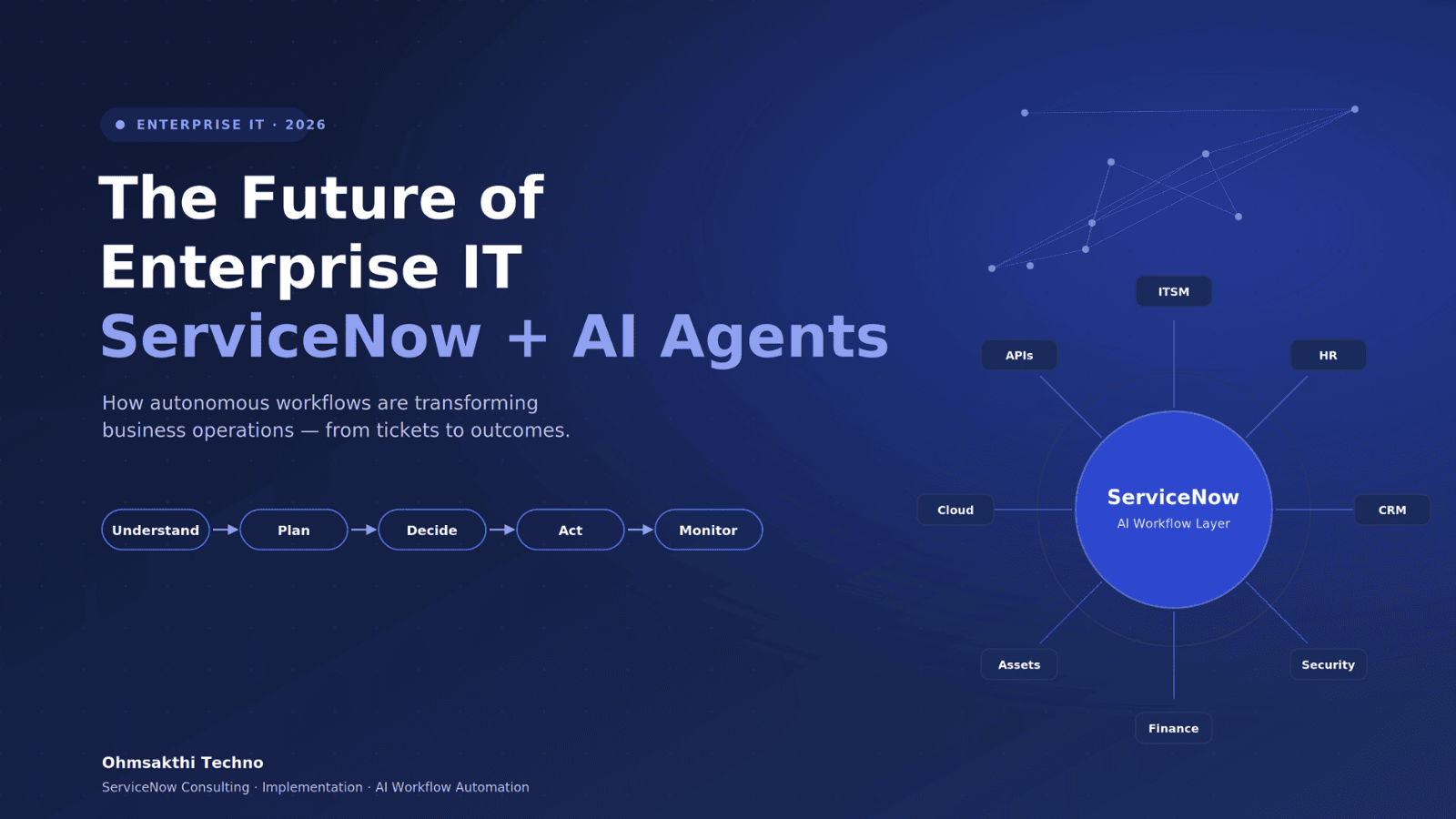
The Future of Enterprise IT in 2026: How ServiceNow and AI Agents Are Transforming Business Workflows
Enterprise IT Is Entering a New Era
For years, businesses have invested in IT service management platforms, cloud infrastructure, enterprise applications, automation tools and digital transformation initiatives. Yet many organizations still depend on manual processes.
Employees submit requests through email. IT teams manually classify tickets. Approvals move between departments. Service teams switch between multiple applications. Managers wait for reports. Developers spend valuable time maintaining repetitive workflows.
The next evolution of enterprise IT is changing this model. In 2026, businesses are moving beyond simple automation toward AI-powered workflows, AI agents and intelligent enterprise automation. At the centre of this transformation is a critical question: “What if enterprise software could not only tell you what needs to be done, but could actually help execute the work?”
This is where ServiceNow, AI Agents, intelligent automation and modern IT service management are becoming increasingly important. For organizations planning their next phase of digital transformation, this represents a major shift in how technology can support business operations.
Zoho business solutions and automation
Enterprise IT Is Moving From Automation to Intelligent Execution
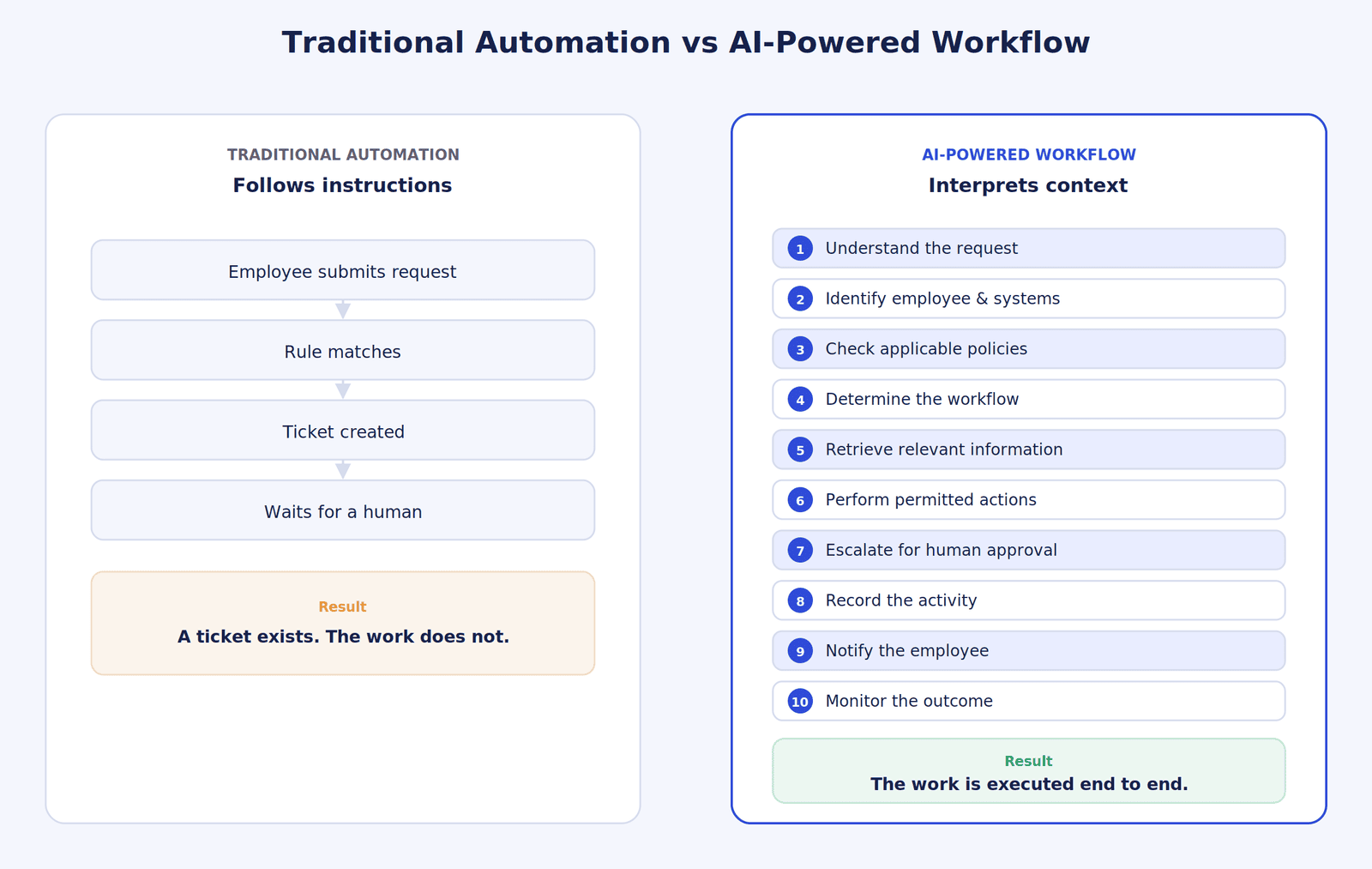
Traditional automation follows predefined rules: if an employee submits a password-reset request → create a ticket. Useful, but limited. An AI-powered workflow can go further.
Why Businesses Are Rethinking Enterprise IT in 2026
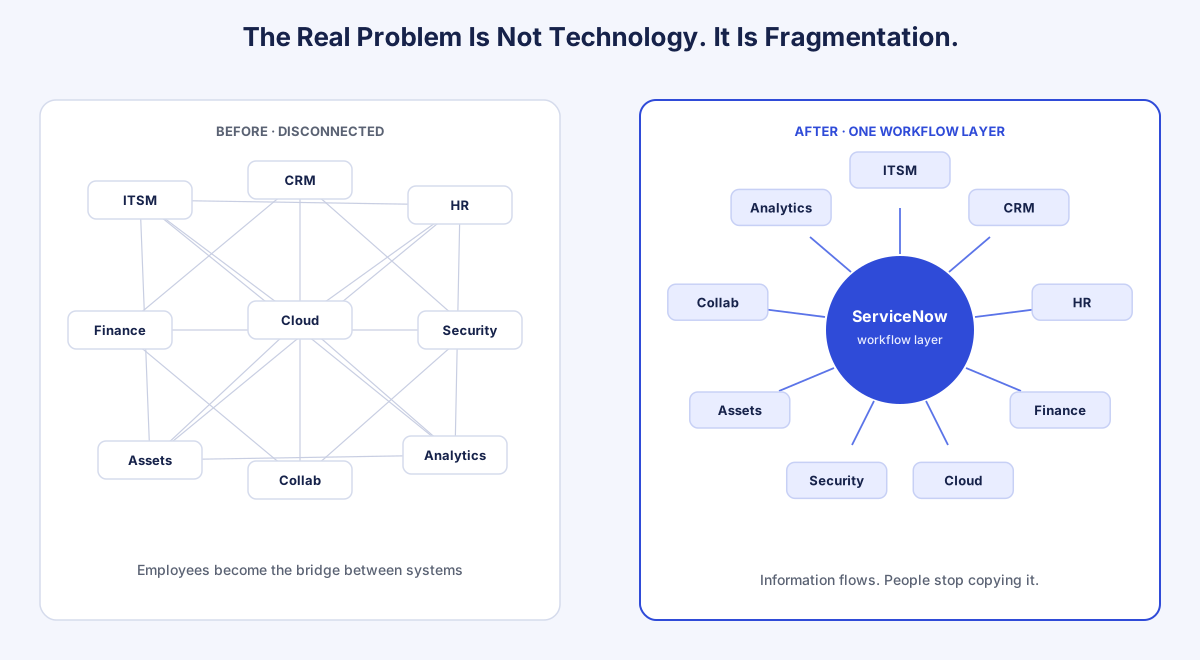
Modern organizations rarely operate on one application. A typical enterprise may have IT service management software, CRM platforms, HR applications, finance systems, cloud infrastructure, security platforms, asset management systems, collaboration tools, customer service platforms, data and analytics systems, and AI applications.
The challenge is not necessarily a lack of technology. The challenge is fragmentation.
When applications operate independently, employees become the bridge between systems. Information gets copied. Requests get forwarded. Approvals get delayed. Data becomes inconsistent. Repetitive administrative work consumes time that could otherwise be spent on strategic activities.
This creates a major opportunity for organizations to rethink how work flows across departments.
What Are ServiceNow AI Agents?
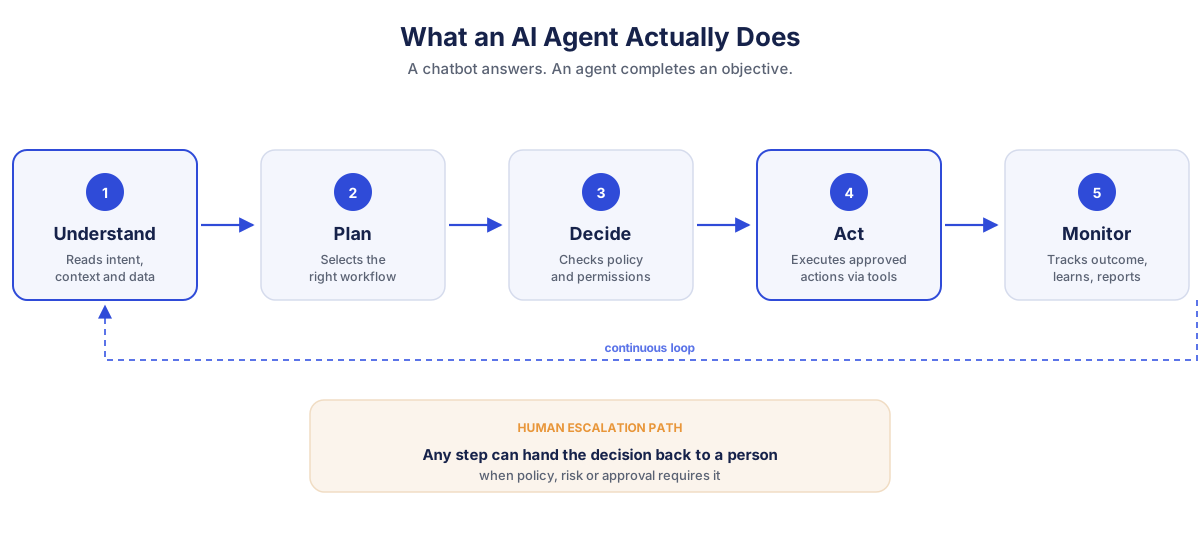
An AI agent is different from a conventional chatbot. A chatbot primarily provides information or responses.
An AI agent can be designed to:
Understand → Plan → Decide → Act → Monitor
Within the ServiceNow ecosystem, AI agents can use business data, workflows, scripts, tools and other capabilities to complete defined objectives.
For example:
Traditional IT Support:
Employee → Email → IT Team → Manual Investigation → Resolution
AI-Powered IT Workflow:
Employee → AI Agent → Context & Data → Automated Actions → Resolution / Human Escalation
ServiceNow and the Evolution of ITSM
ServiceNow ITSM helps organizations manage core IT service processes such as Incident Management, Problem Management, Change Management, Service Request Management, Knowledge Management, Service Catalog and Configuration or Asset Management. The next step is to make these workflows increasingly intelligent.
Imagine an incident management process where AI can help classify incoming incidents, identify similar historical incidents, recommend solutions, retrieve relevant knowledge, prioritize requests, route incidents, trigger approved workflows, communicate status updates and escalate complex issues. This is where ServiceNow ITSM automation becomes more than ticket management.
From ServiceNow Automation to Autonomous Workflows
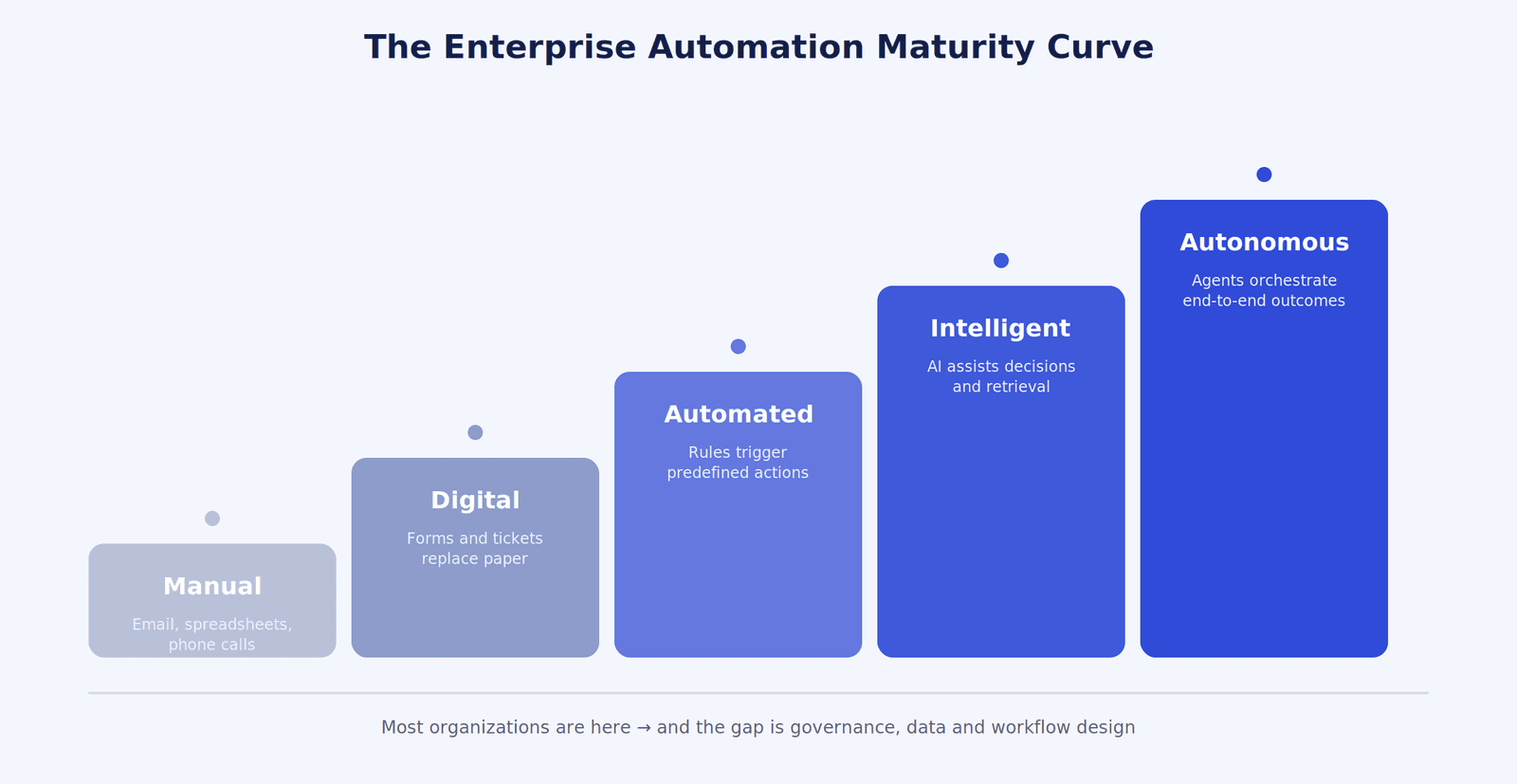
There is an important difference between automation and autonomous work.
Automation: A predefined workflow performs a predefined action.
AI-assisted workflow: AI helps a person make a decision or perform a task.
AI agent: The agent can perform a defined objective using tools, data and workflows.
Autonomous workflow: Multiple steps can be coordinated from beginning to end within defined permissions, policies and governance.
Real-World ServiceNow AI Use Cases
The potential applications of ServiceNow AI and workflow automation extend across almost every major enterprise function.
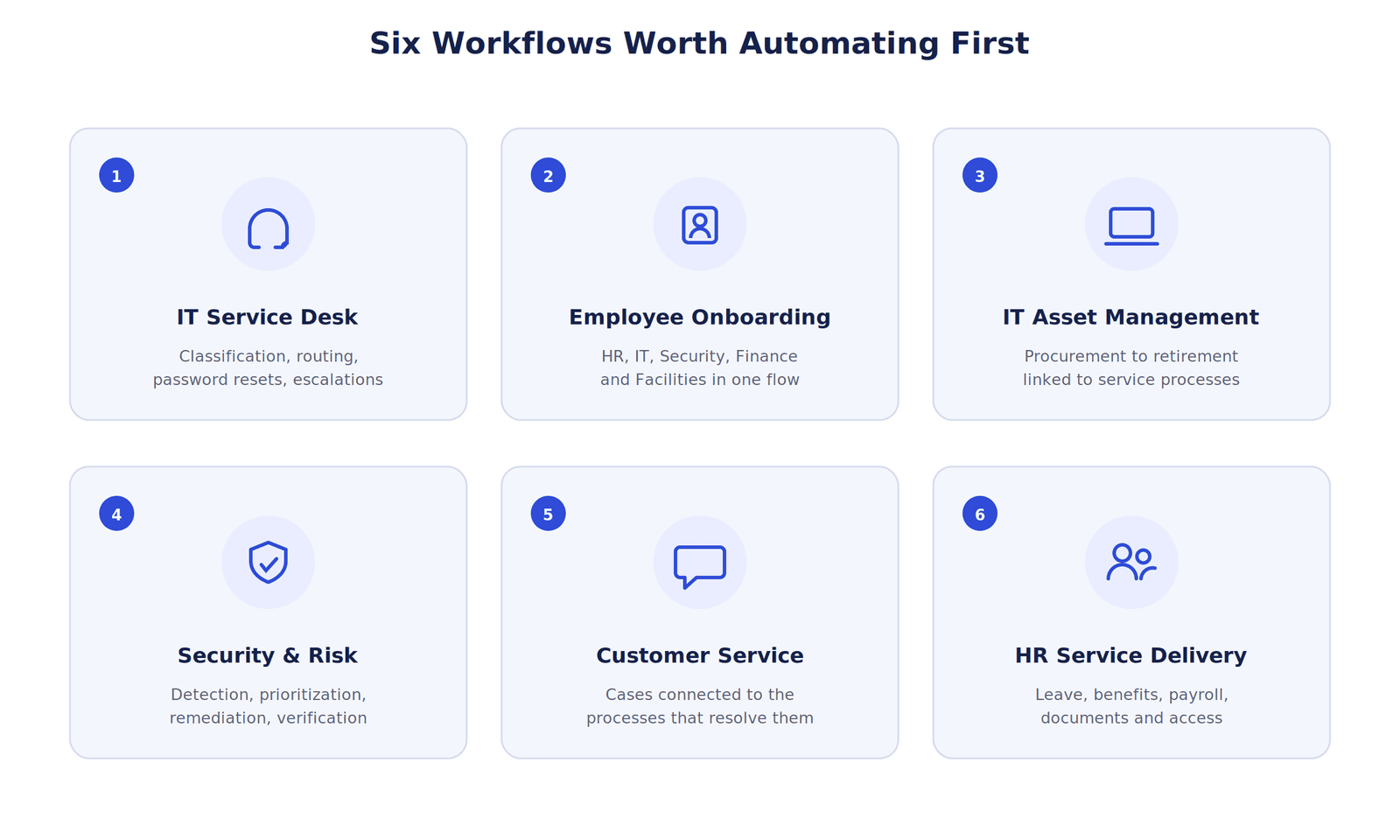
1. IT Service Desk Automation
AI can assist with incident classification, ticket routing, password requests, common troubleshooting, knowledge recommendations, service requests, status updates and escalations.
The objective is not simply to reduce tickets. The objective is to resolve the right issues faster while allowing IT professionals to focus on complex problems.
2. Employee Onboarding Automation
Employee onboarding often involves multiple departments: HR → IT → Security → Finance → Facilities → Employee.
A ServiceNow workflow can coordinate these processes. An HR team can create a new employee record and initiate account provisioning, laptop allocation, software access, security permissions, facilities requirements and employee documentation.
AI can assist with understanding requests, routing work and coordinating tasks within approved policies.
3. IT Asset Management
Enterprise IT teams manage laptops, desktops, mobile devices, servers, applications, software licenses and network devices.
ServiceNow can connect asset information with workflows and service processes, enabling structured processes around Procurement → Assignment → Support → Maintenance → Replacement → Retirement.
4. Cybersecurity and Risk Workflows
Security teams deal with large volumes of alerts, vulnerabilities and remediation activities.
Intelligent workflows can help connect Detection → Assessment → Prioritization → Assignment → Remediation → Verification.
For organizations adopting AI at scale, governance, permissions, auditability and human escalation are essential.
5. Customer Service Automation
ServiceNow workflows can support customer cases, service requests, order processes, escalations, knowledge management, customer communications and case resolution.
This creates an opportunity to connect customer interactions with the underlying business processes required to resolve them.
6. HR Service Delivery
Employees regularly require assistance with leave policies, benefits, payroll queries, employee documentation, workplace requests, access requests and HR policies.
Why ServiceNow Implementation Matters
Buying a powerful platform does not automatically create digital transformation. Implementation matters.
A poorly designed ServiceNow environment can simply digitize inefficient processes. A well-designed implementation can help organizations rethink how work moves across departments. Before implementing ServiceNow, businesses should consider:
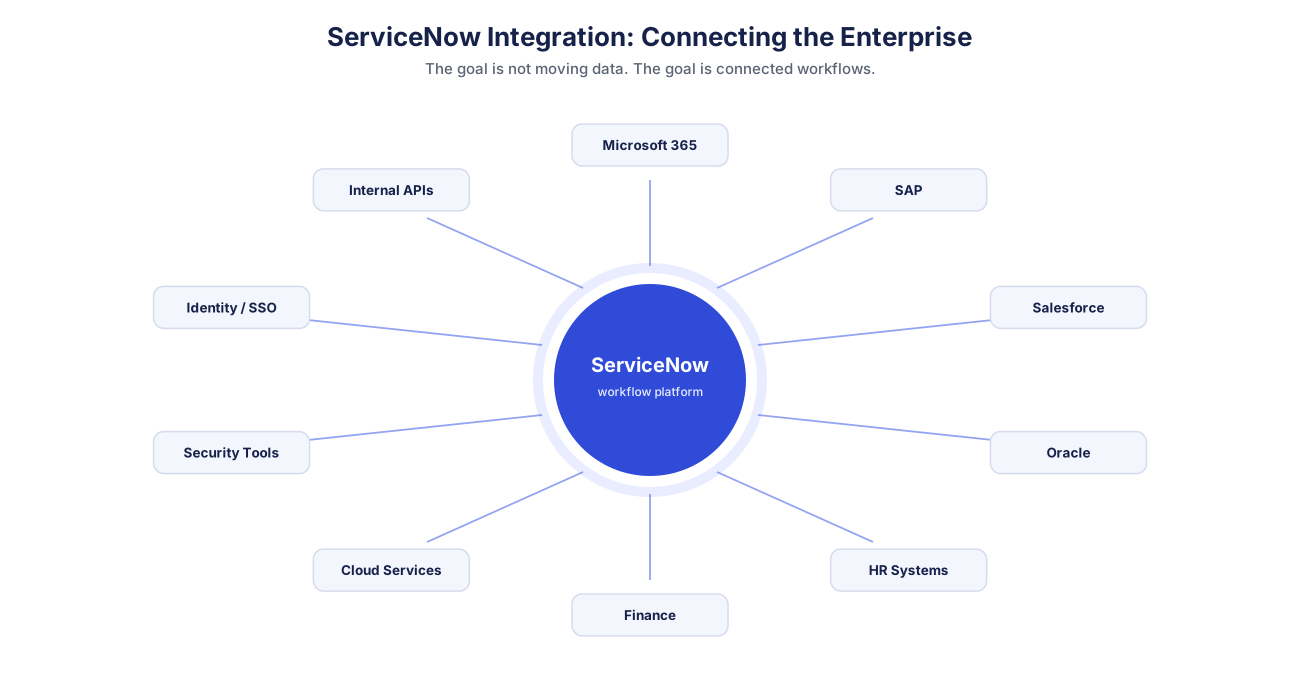
ServiceNow Integration: Connecting the Enterprise
Organizations rarely want ServiceNow to operate as an isolated application. It may need to interact with Microsoft platforms, SAP, Salesforce, Oracle, HR systems, finance platforms, cloud services, security tools, identity systems, custom applications and internal APIs.
This is where ServiceNow integration services become strategically important. The goal is not simply to move data between applications. The goal is to create connected workflows.
Example:
HR System → Employee Created → ServiceNow → IT Account Provisioning → Identity Platform → Access Created → IT Asset Management → Laptop Assigned → Employee → Onboarding Completed.
The Growing Importance of ServiceNow Developers
As enterprise workflows become more sophisticated, organizations need professionals who understand both technology and business processes.
Modern ServiceNow developers may work with ServiceNow platform configuration, custom applications, APIs, integrations, workflow automation, ITSM, ITOM, ITAM, Service Catalog, JavaScript, Business Rules, Client Scripts, Flow Designer, IntegrationHub, AI capabilities, testing and performance optimization.
Technical skills alone are not enough. A strong ServiceNow development approach begins with understanding the business problem and then determining the simplest, most scalable and secure solution.
Why Businesses Are Looking at ServiceNow Outsourcing
- Building a large internal ServiceNow team can be expensive and time-consuming.
- Organizations may need ServiceNow developers, technical consultants, business analysts, solution architects, integration specialists, QA engineers, project managers and support specialists.
- ServiceNow outsourcing can provide a flexible way to access specialized skills.
Possible models include: - Dedicated Developers - for ongoing development requirements.
- Project-Based Teams - for implementation and transformation projects.
- Managed Support - for continuous platform maintenance and optimization.
- Staff Augmentation - for organizations that already have an internal ServiceNow team but need additional expertise.
ServiceNow Developers in India for Global Projects
India has a large technology talent ecosystem, making it an important location for global IT delivery.
For organizations in the United Kingdom, Germany, Netherlands, Switzerland, Ireland, Europe, the Middle East and Asia-Pacific, a distributed ServiceNow development model can provide access to specialized technology professionals.
Successful outsourcing is about more than cost. Organizations should evaluate technical capability, ServiceNow experience, communication, time-zone coverage, security practices, project governance, documentation, quality assurance, scalability and long-term support. The right ServiceNow consulting company should function as a technology extension of the client's team.
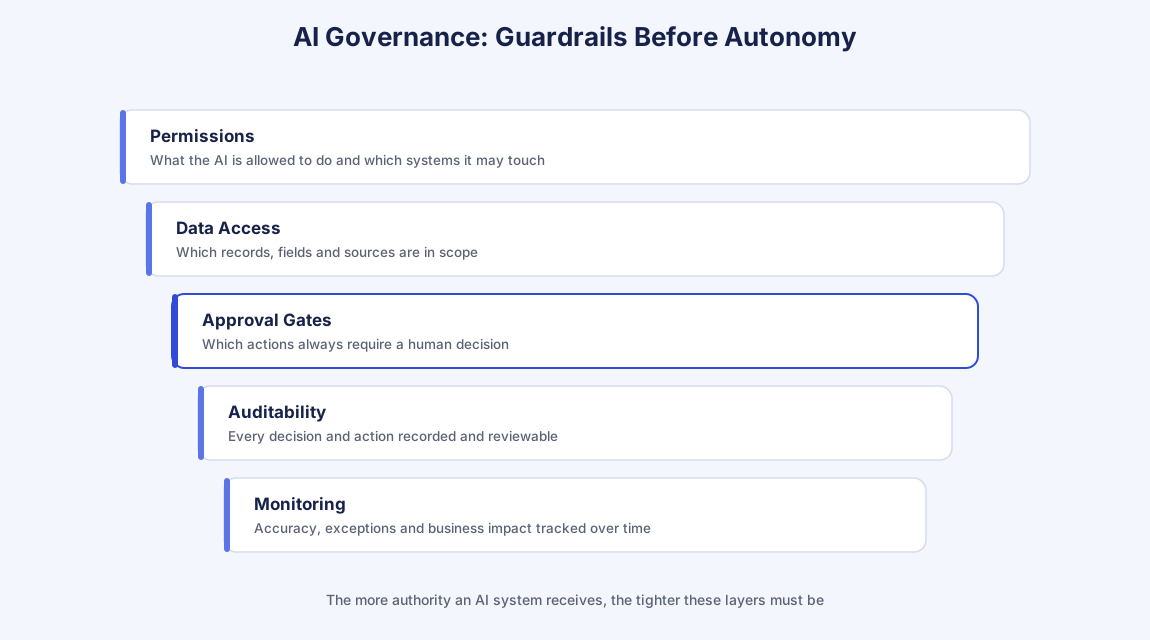
AI Governance: The Part Businesses Cannot Ignore
AI adoption is accelerating, but intelligent automation must be implemented responsibly.
The more authority an AI system receives, the more important governance becomes.
Organizations should define:
AI should operate within clearly defined permissions, policies, auditability and escalation paths.
The Future of Enterprise IT Is Not Just AI
It is tempting to think that AI alone will transform enterprise IT. But AI is only one part of the equation.
The real transformation happens when: AI + Data + Workflow + Integration + Security + Governance + People work together.
An organization may have an excellent AI model. But if its data is fragmented, processes are poorly designed and permissions are unclear, AI will not magically solve the problem.
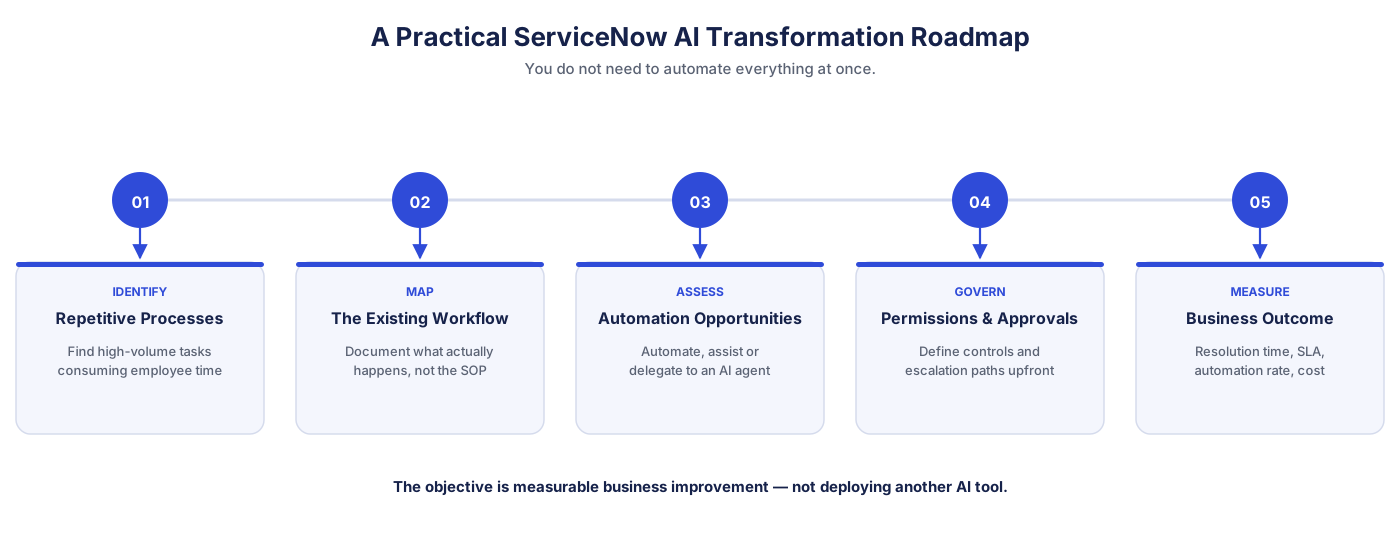
A Practical Roadmap for ServiceNow AI Transformation
Organizations do not need to automate everything at once.
Step 1: Identify Repetitive Processes - Look for high-volume tasks consuming employee time.
Step 2: Map the Existing Workflow - Document what actually happens, not only what the process document says should happen.
Step 3: Identify Automation Opportunities - Determine which steps can be automated, assisted or delegated to AI.
Step 4: Build Governance Into the Workflow - Define permissions, approval requirements, security controls and escalation paths.
Step 5: Measure the Outcome - Track resolution time, automation rate, employee productivity, service quality, customer experience, operational cost and SLA performance.
What Will ServiceNow Look Like in the Next Few Years?
Enterprise platforms are moving toward environments where AI can understand context, reason about a business problem, coordinate workflows, take approved actions, monitor the result and escalate when necessary.
The future of enterprise IT may be less about employees navigating dozens of applications and more about employees expressing intent while intelligent systems coordinate the work behind that intent. Instead of “Which system do I need to open?” the future increasingly becomes “What do I need to accomplish?”
Why Ohmsakthi Techno for ServiceNow Solutions?
At Ohmsakthi Techno, our approach to enterprise technology focuses on connecting business requirements with practical technology solutions.
For organizations exploring ServiceNow, we can support areas such as:
Our goal is to help organizations build scalable, secure and practical technology environments aligned with their business processes.
From IT Support to Intelligent Enterprise Operations
The biggest change coming to enterprise IT is not simply the introduction of another software platform. It is a change in how work gets done.
For decades, employees have learned how to navigate enterprise software. The next generation of enterprise technology is increasingly focused on allowing technology to understand the employee's intent and coordinate the work required to achieve an outcome.
That is the promise of ServiceNow AI, enterprise workflow automation and agentic AI.
Is Your Business Ready for AI-Powered ServiceNow Automation?
If your organization is dealing with high IT ticket volumes, manual service desk processes, multiple disconnected applications, repetitive employee requests, complex approval workflows, slow incident resolution, manual reporting, difficult system integrations, growing IT operations or limited ServiceNow development capacity, it may be time to evaluate how ServiceNow consulting, development and AI-powered workflow automation can transform your operations.
The starting point is understanding where your people spend their time, where your workflows break down and where intelligent automation can create measurable value.
Build the Next Generation of Enterprise IT with Ohmsakthi Techno
The future of enterprise IT is moving from:
Manual → Digital → Automated → Intelligent → Autonomous
ServiceNow is evolving alongside this transformation, with AI agents, workflow orchestration, enterprise context and governance becoming increasingly important components of the platform.
Businesses that prepare their processes, data, integrations and governance today can create a stronger foundation for the next generation of enterprise automation.
Ohmsakthi Techno helps organizations turn that vision into practical technology solutions.
Looking for ServiceNow developers, consultants or implementation support?
Let’s discuss your ServiceNow transformation.
Frequently Asked Questions
What is ServiceNow?
ServiceNow is an enterprise cloud platform used to manage and automate workflows across areas such as IT service management, employee services, customer service, security and other business functions.
What are ServiceNow AI Agents?
ServiceNow AI Agents are AI-powered systems designed to perform defined tasks and workflows using business data, tools and platform capabilities.
What is ServiceNow ITSM?
ServiceNow ITSM is a set of capabilities for managing IT services, including incidents, problems, changes, requests, knowledge and service catalog processes.
Why do businesses need ServiceNow implementation services?
Professional implementation can help organizations configure the platform around their actual business processes, integrations, security requirements and operational goals.
What does a ServiceNow developer do?
A ServiceNow developer can build, configure, customize and integrate ServiceNow applications, workflows and platform capabilities according to business requirements.
Can ServiceNow integrate with other business applications?
Yes. ServiceNow is designed to connect with enterprise applications and data sources through integrations, APIs and platform capabilities.
What is ServiceNow outsourcing?
ServiceNow outsourcing allows organizations to use an external technology partner for ServiceNow development, implementation, support, staff augmentation or managed services.
How can AI improve ServiceNow ITSM?
AI can assist with areas such as incident classification, knowledge retrieval, request handling, workflow execution, routing and other operational activities, depending on the organization’s implementation and governance model.
Is ServiceNow suitable for large enterprises?
ServiceNow is designed for enterprise-scale workflows and can support multiple business functions, integrations and governance requirements.
How can a ServiceNow consulting company help?
A ServiceNow consulting partner can help assess existing processes, design workflows, plan integrations, implement the platform, develop custom solutions and provide ongoing support.
Conclusion
The future of Enterprise IT is moving toward smarter, more connected, and automated workflows. ServiceNow and AI Agents can help organizations reduce repetitive manual tasks, improve employee and customer experiences, and enable teams to focus on more valuable work.
As businesses continue to adopt AI-driven workflows in 2026 and beyond, combining ServiceNow with intelligent AI Agents can create faster, more efficient, and more responsive business operations.
If you would like to learn more about how we can help your organization transform its IT and business workflows, please get in touch with us through our Contact Us.