
ServiceNow Implementation: 12 Critical Mistakes Businesses Should Avoid in 2026
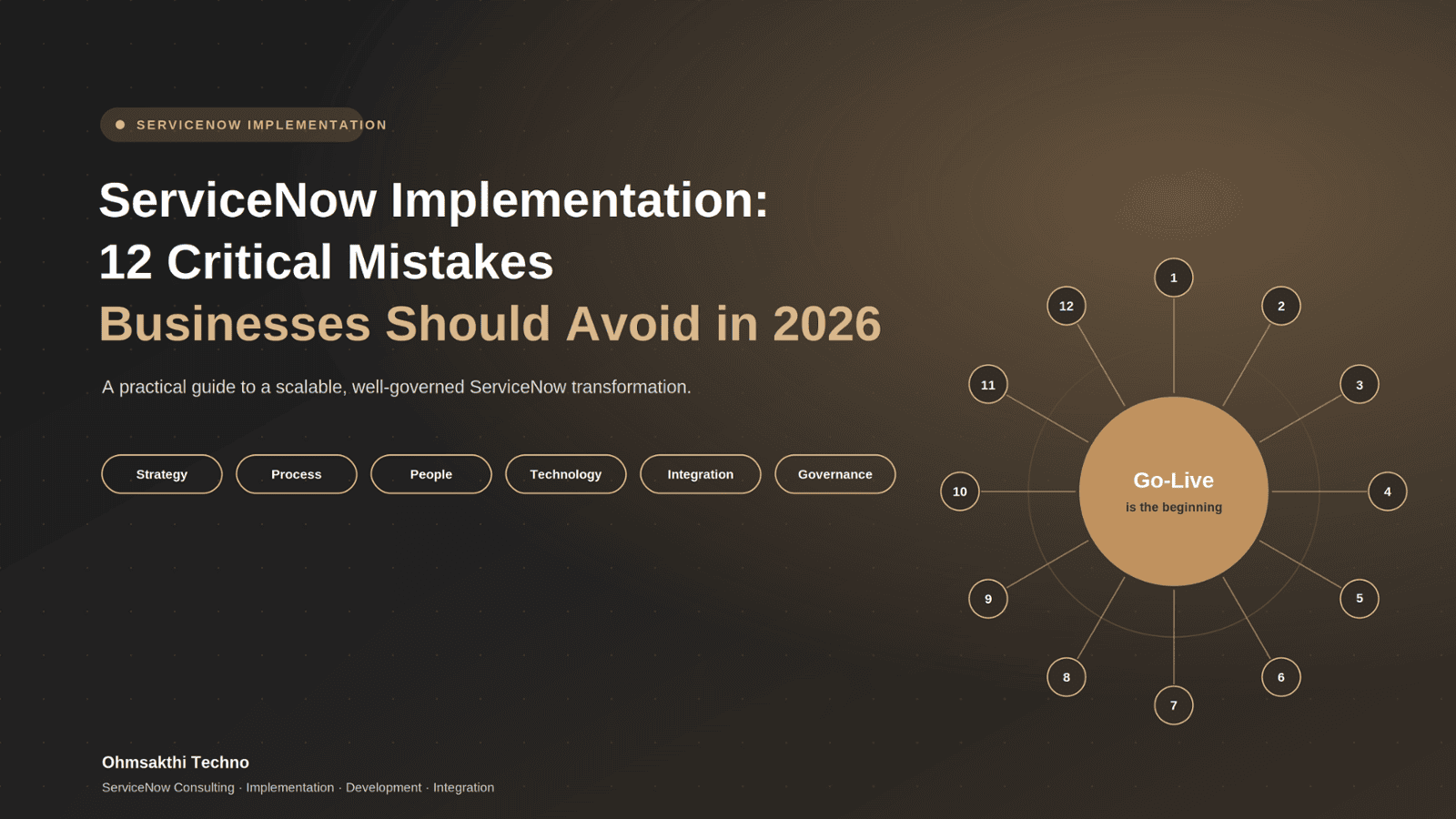
Implementing an enterprise platform is rarely just a technology project. It is a business transformation project. When organizations implement ServiceNow, they are not simply installing another IT application. They are redesigning how employees, IT teams, business departments, applications, data and workflows interact.
That is why a successful ServiceNow implementation requires more than platform configuration. It requires:
Strategy + Process + People + Technology + Integration + Governance
When these elements are aligned, ServiceNow can become a powerful platform for IT service management, workflow automation, enterprise integration and intelligent operations.
When they are not, organizations can end up with unnecessary customization, complicated workflows, poor adoption, technical debt and an expensive platform that does not deliver its expected value.
So what should businesses avoid?
Here are 12 critical ServiceNow implementation mistakes organizations should understand before starting their transformation journey.
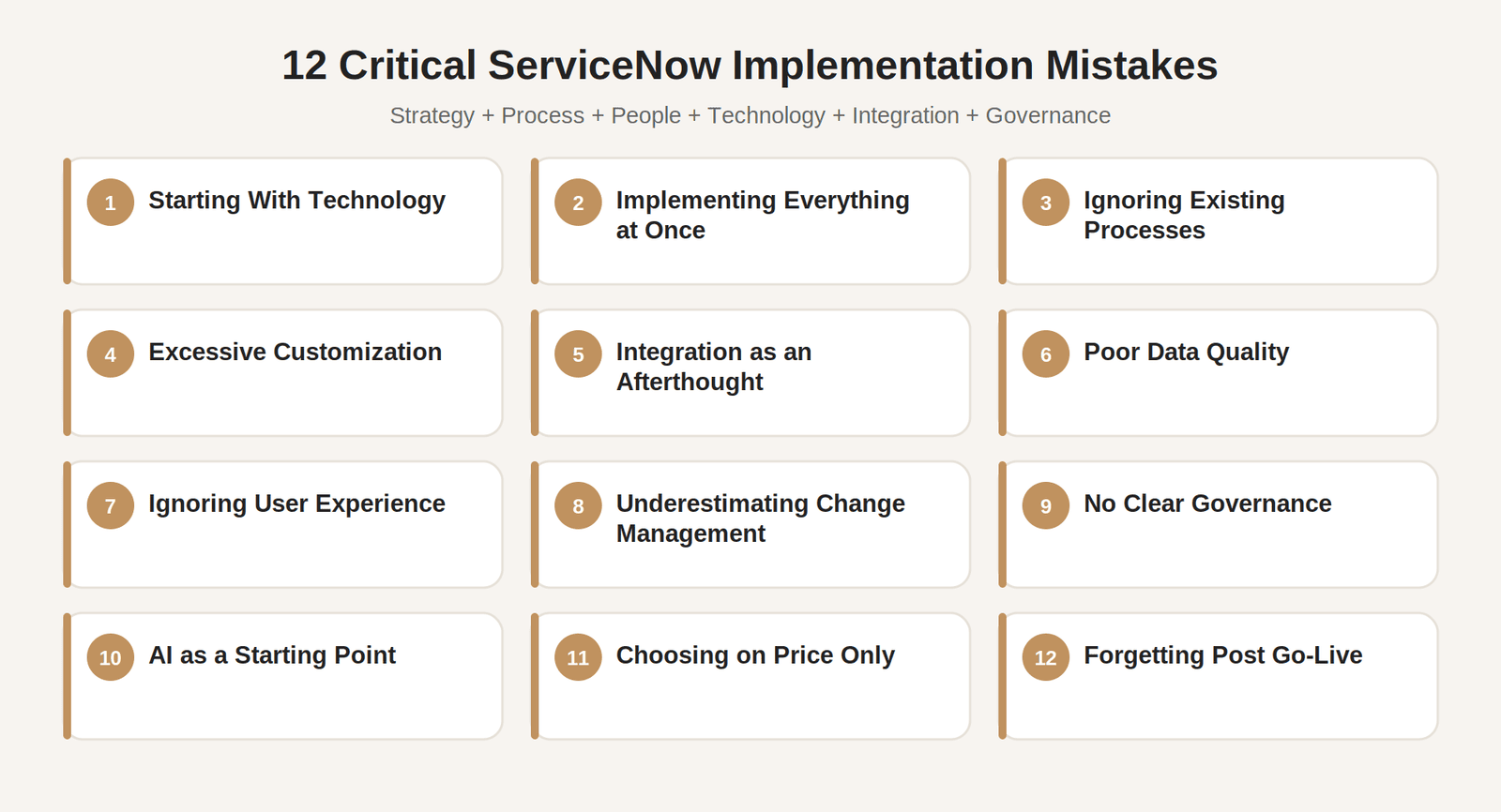
Starting With Technology Instead of Business Problems
One of the most common mistakes is beginning with:
"What can ServiceNow do?"
Instead, organizations should start with:
"What business problems are we trying to solve?"
For example:
A company may have:
- Slow incident resolution
- Manual approvals
- Poor visibility
- Duplicate service requests
- Difficult employee onboarding
- Multiple disconnected systems
- High IT support costs
These problems should define the implementation strategy. ServiceNow should then be configured around those business objectives.
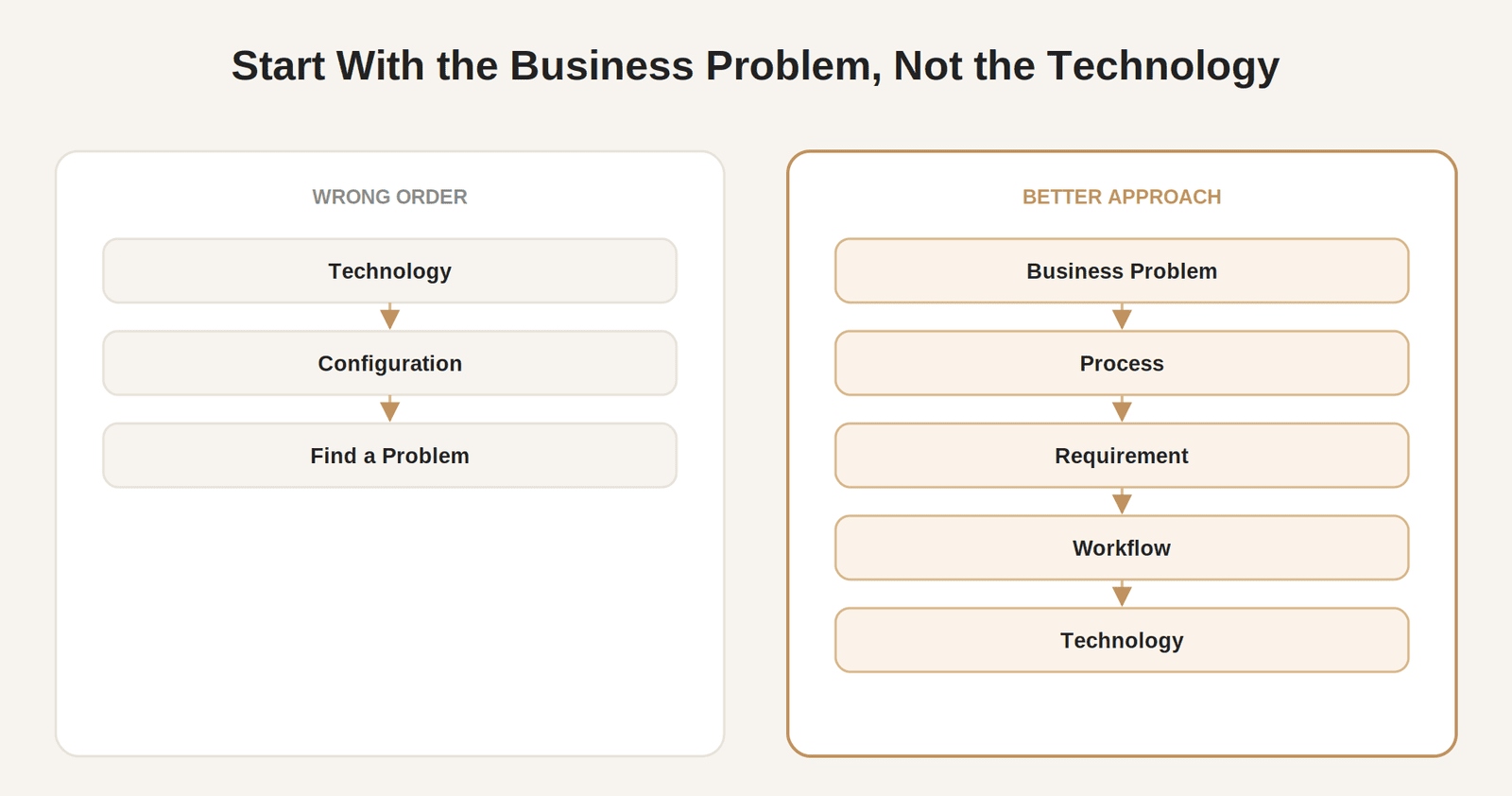
Better approach
Start with:
Business Problem → Process → Requirement → Workflow → Technology
Not:
Technology → Configuration → Find a Problem
Related Post
ServiceNow Development Outsourcing
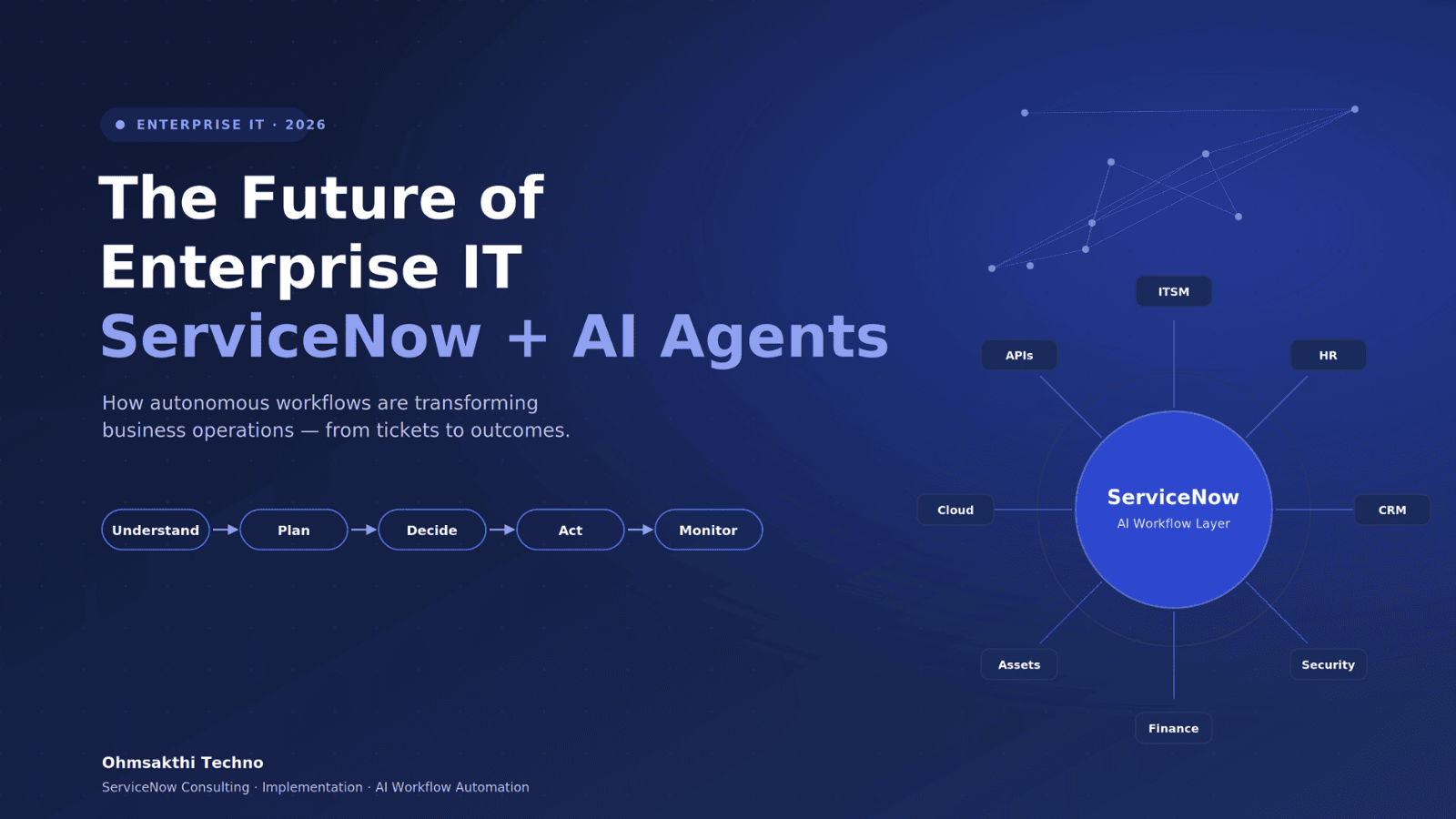
THE FUTURE OF ENTERPRISE IT IN 2026
Zoho business solutions and automation
Trying to Implement Everything at Once
ServiceNow is a broad enterprise platform. Organizations can potentially implement capabilities across:
- ITSM
- ITOM
- ITAM
- HR workflows
- Customer service
- Security
- Risk
- Governance
- Automation
- AI
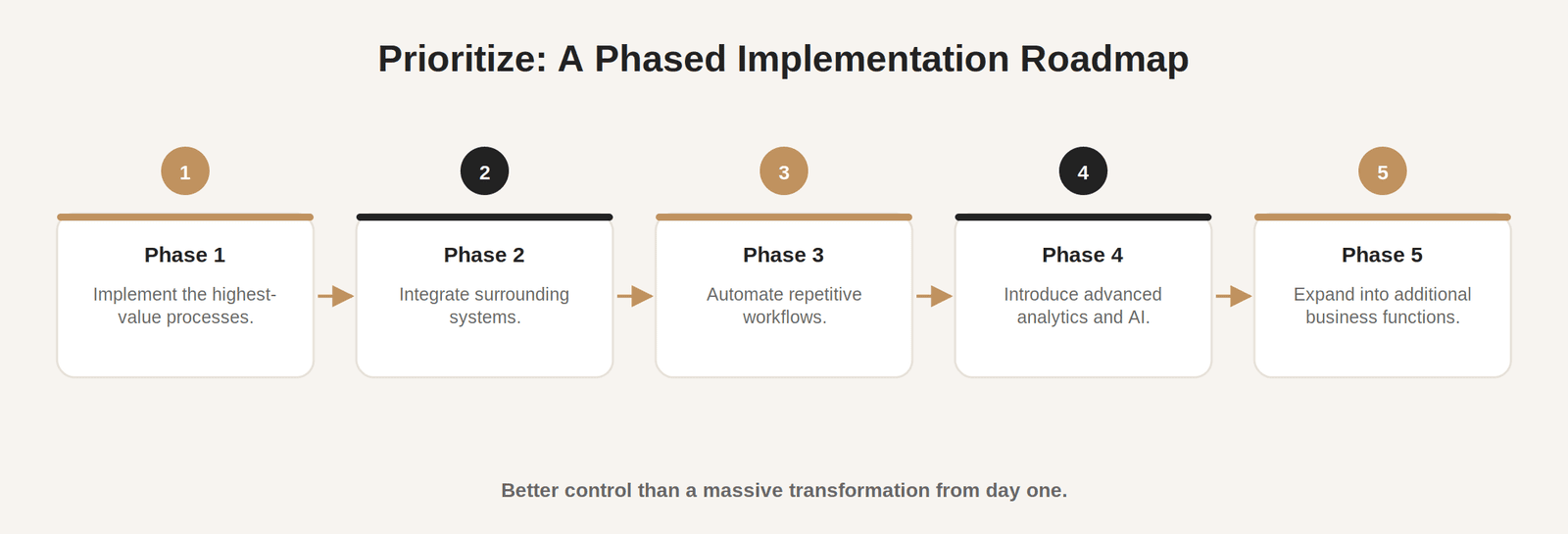
Trying to implement everything simultaneously can create unnecessary complexity. A better approach is to prioritize.
Phase 1
Implement the highest-value processes.
Phase 2
Integrate surrounding systems.
Phase 3
Automate repetitive workflows.
Phase 4
Introduce advanced analytics and AI.
Phase 5
Expand into additional business functions. A phased ServiceNow implementation roadmap usually provides better control than attempting a massive transformation from day one.
Ignoring Existing Business Processes
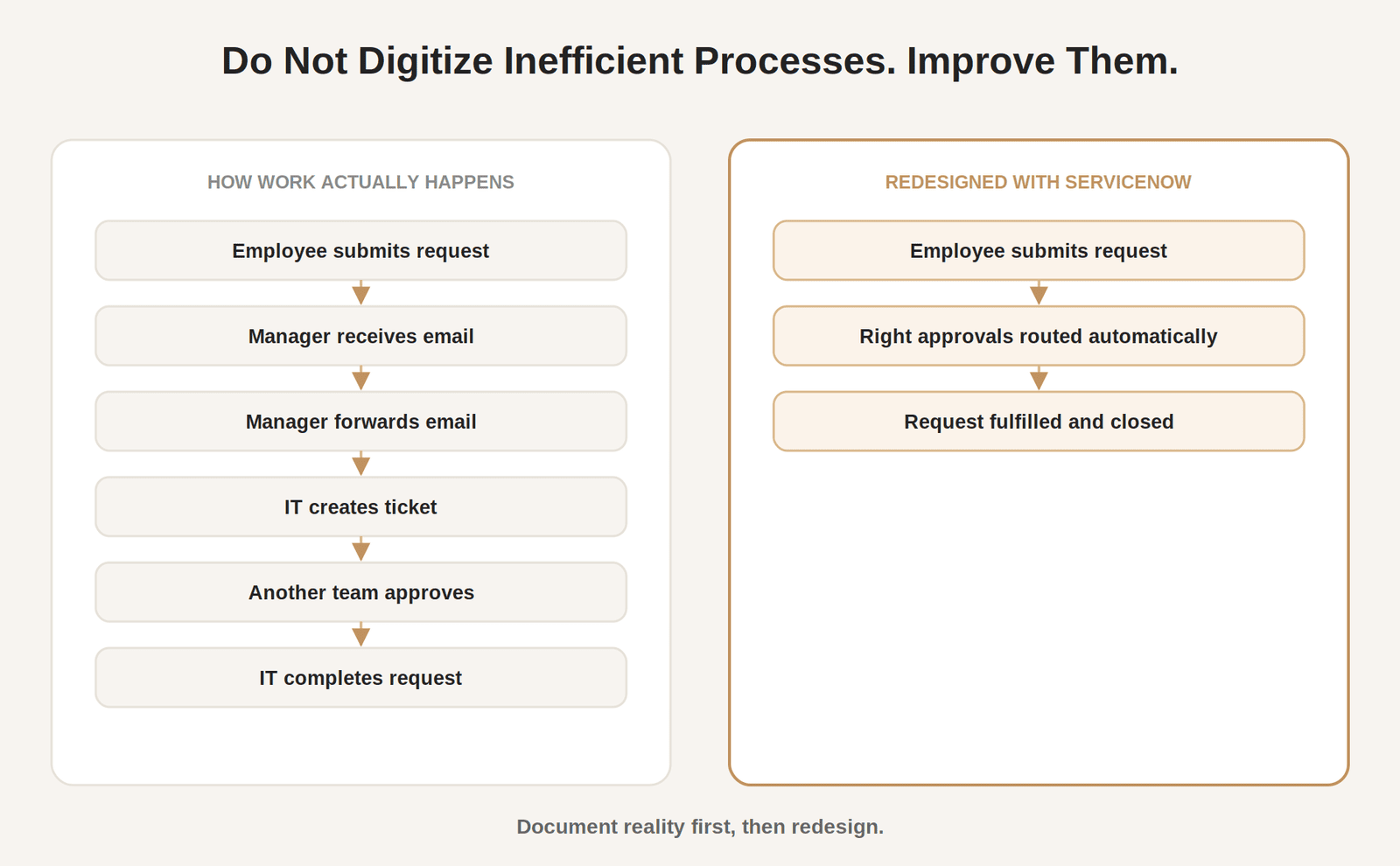
Before implementing ServiceNow, organizations should document how work actually happens. Not how management believes it happens. Not how the process document says it happens. But how employees actually perform the work.
For example:
Employee submits request
↓
Manager receives email
↓
Manager forwards email
↓
IT creates ticket
↓
Another team approves
↓
IT completes request
This may technically work. But it may also involve unnecessary steps. ServiceNow provides an opportunity to redesign the process. The objective should not be to digitize inefficient processes. The objective should be to improve them.
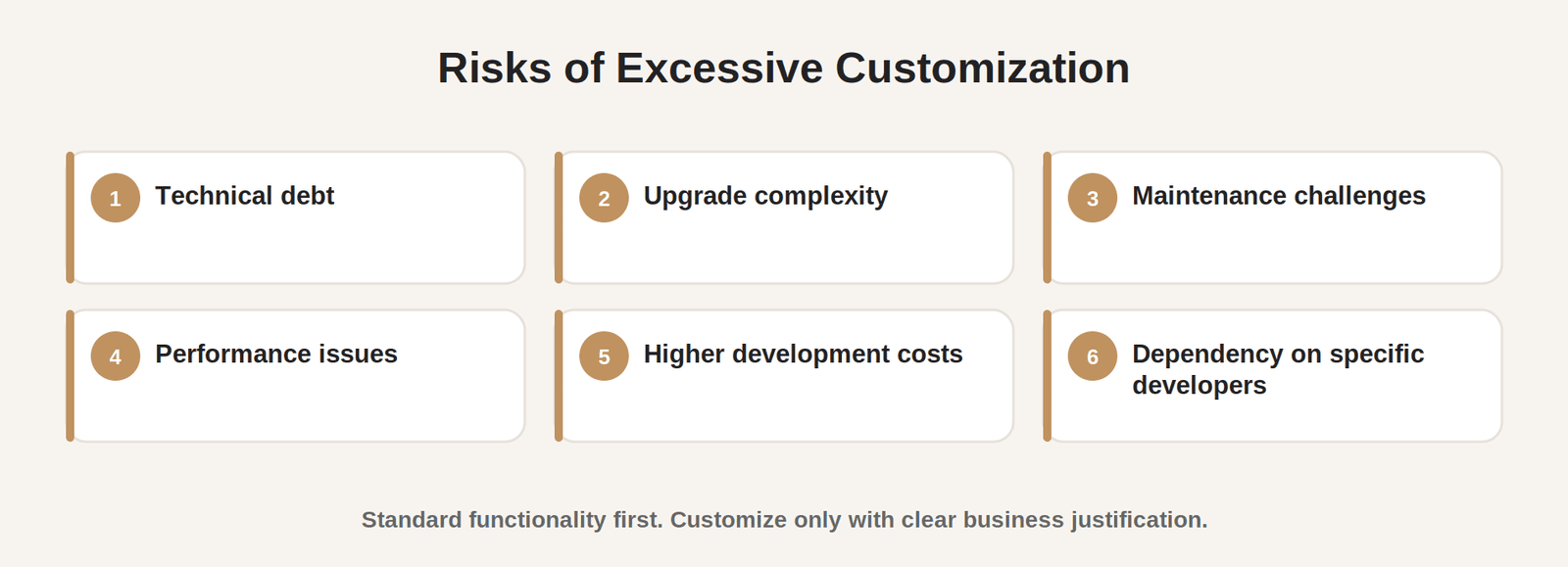
Excessive Customization
ServiceNow is highly configurable.That does not mean everything should be customized.Excessive customization can create:
- Technical debt
- Upgrade complexity
- Maintenance challenges
- Performance issues
- Higher development costs
- Dependency on specific developers
Before customizing a feature, organizations should ask:
Can the requirement be achieved through standard ServiceNow capabilities?
If yes, standard functionality should generally be considered first. Customization should have a clear business justification.
Treating Integration as an Afterthought
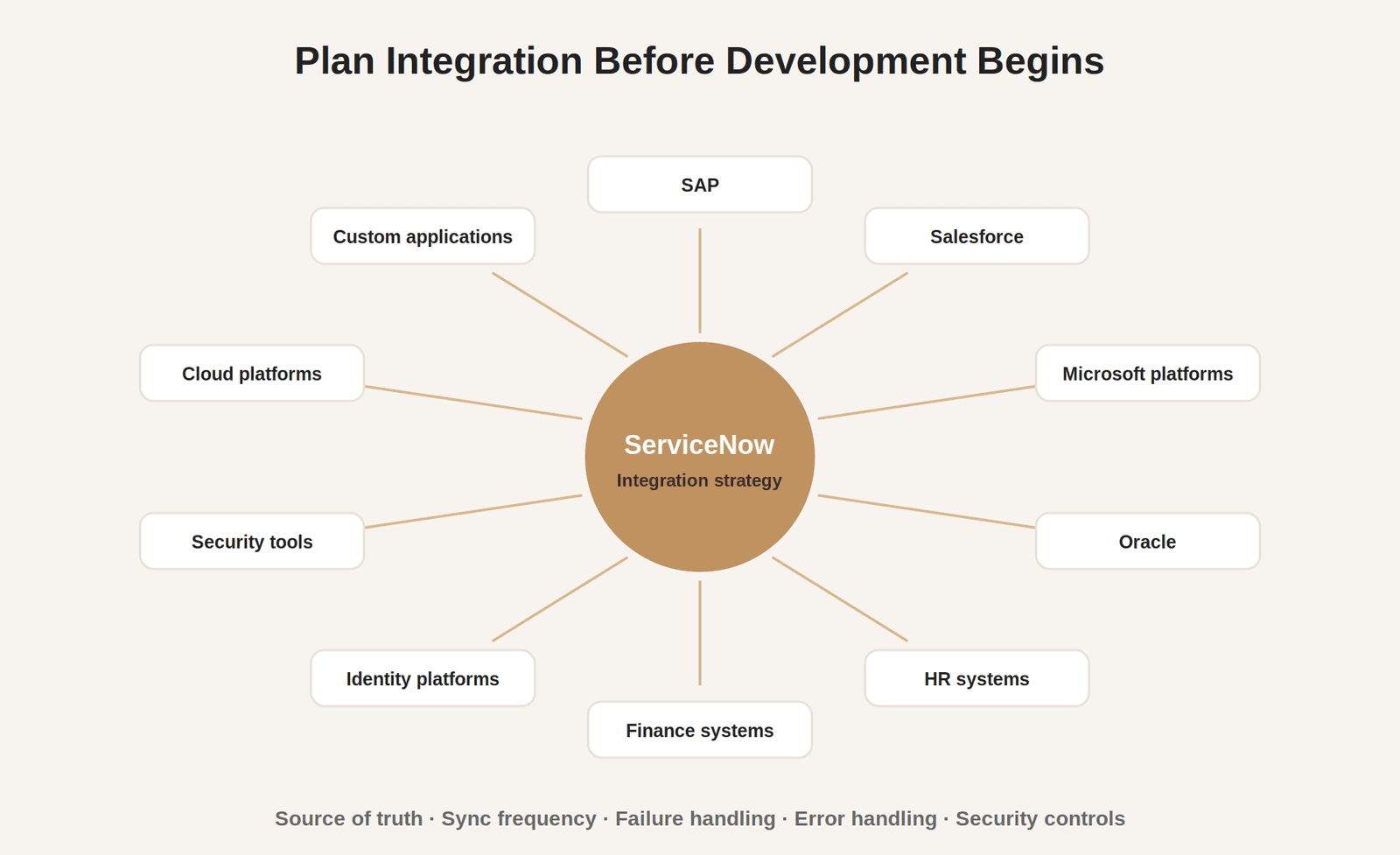
Modern enterprises rarely operate using one application.
ServiceNow may need to connect with:
- SAP
- Salesforce
- Microsoft platforms
- Oracle
- HR systems
- Finance systems
- Identity platforms
- Security tools
- Cloud platforms
- Custom applications
Ignoring integration during the early stages of a ServiceNow implementation can create major problems later. A better approach is to create an integration strategy before development begins. Ask:
- What systems need to exchange data?
- Which system is the source of truth?
- How frequently should information synchronize?
- What happens when integration fails?
- How should errors be handled?
- What security controls are required?
Poor Data Quality
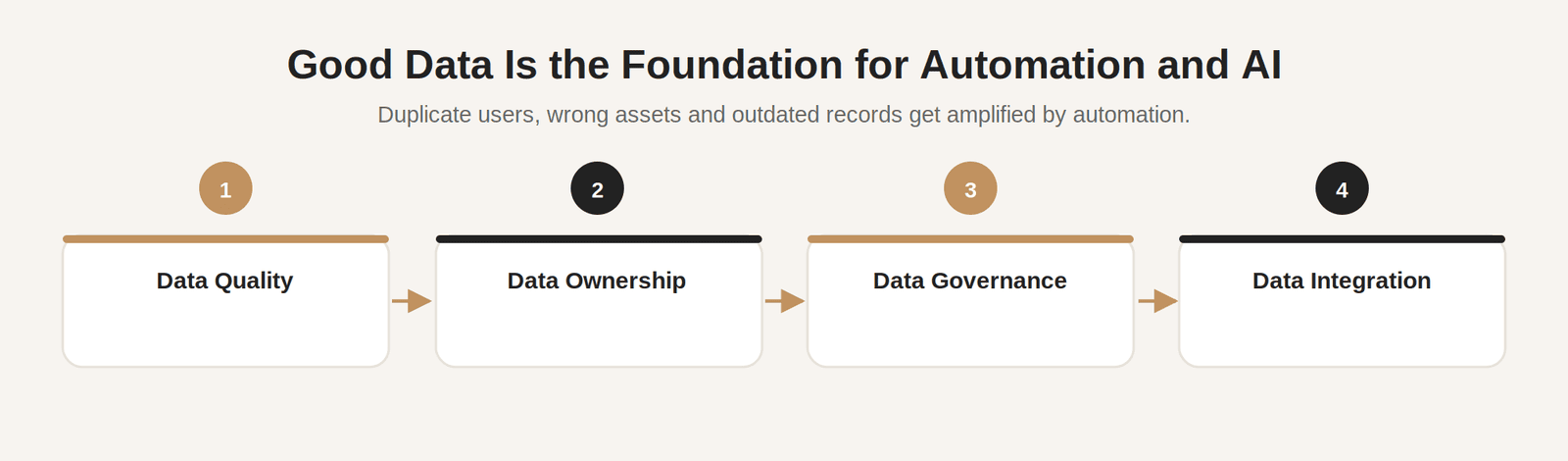
AI and automation cannot compensate for unreliable data. If the organization has:
- Duplicate users
- Incorrect asset information
- Outdated configuration records
- Inconsistent categories
- Missing ownership information
automation can amplify those problems. Before implementing advanced workflows, organizations should assess:
Data Quality → Data Ownership → Data Governance → Data Integration
Good data creates a stronger foundation for automation and AI.
Ignoring User Experience
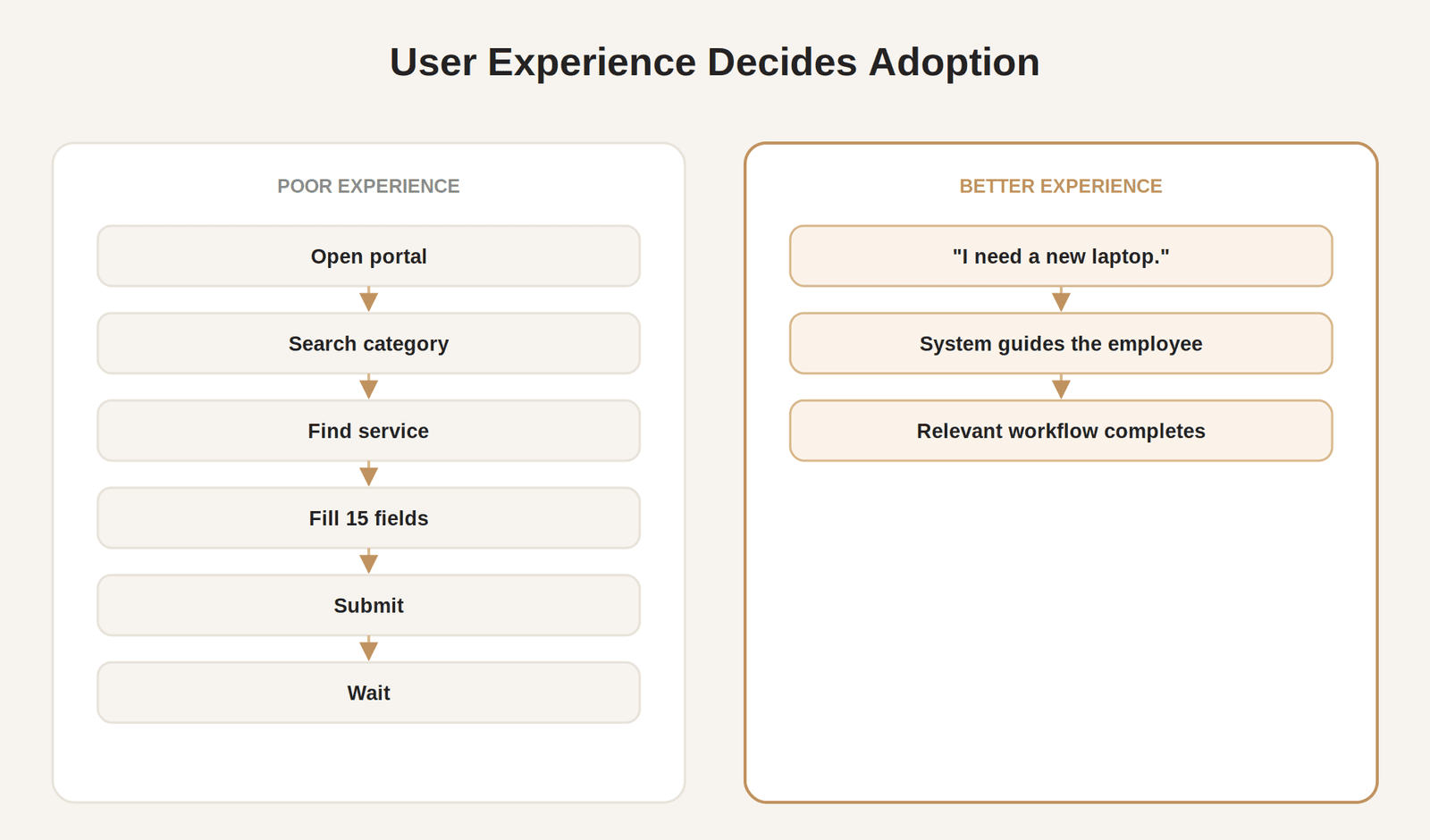
A ServiceNow implementation can be technically excellent and still fail if users do not want to use it. Employees should not have to navigate complicated processes to request a simple service.
Consider the difference:
Poor Experience
Open portal → Search category → Find service → Fill 15 fields → Submit → Wait
Better Experience
"I need a new laptop."
The system guides the employee through the relevant workflow.
User experience should therefore be a major part of ServiceNow implementation planning.
Underestimating Change Management
Technology adoption is a people challenge as much as a technical challenge. Employees may resist new workflows because they are comfortable with existing processes.
They may continue using:
- Spreadsheets
- Chat messages
- Personal tracking documents even after ServiceNow is implemented.
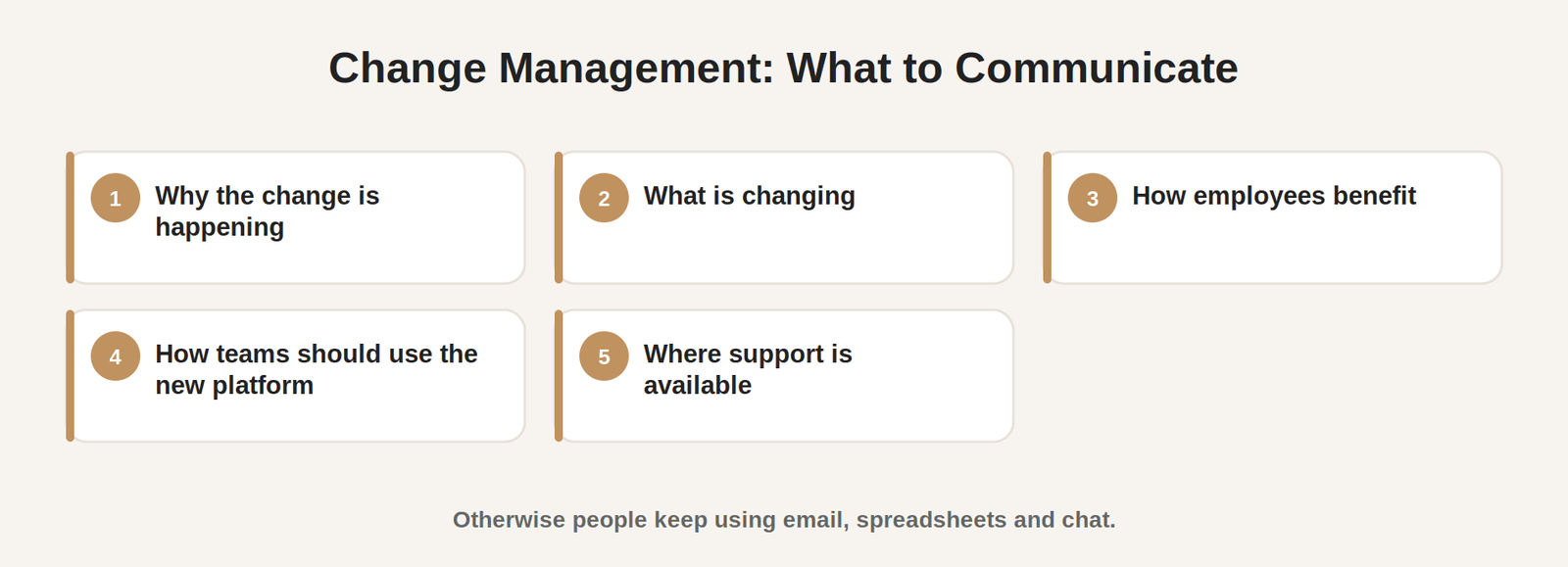
This is why change management should be included from the beginning. Organizations should communicate:
- Why the change is happening
- What is changing
- How employees benefit
- How teams should use the new platform
- Where support is available
Not Defining Clear Governance
Enterprise ServiceNow environments can become complicated quickly.
Organizations need clear ownership.
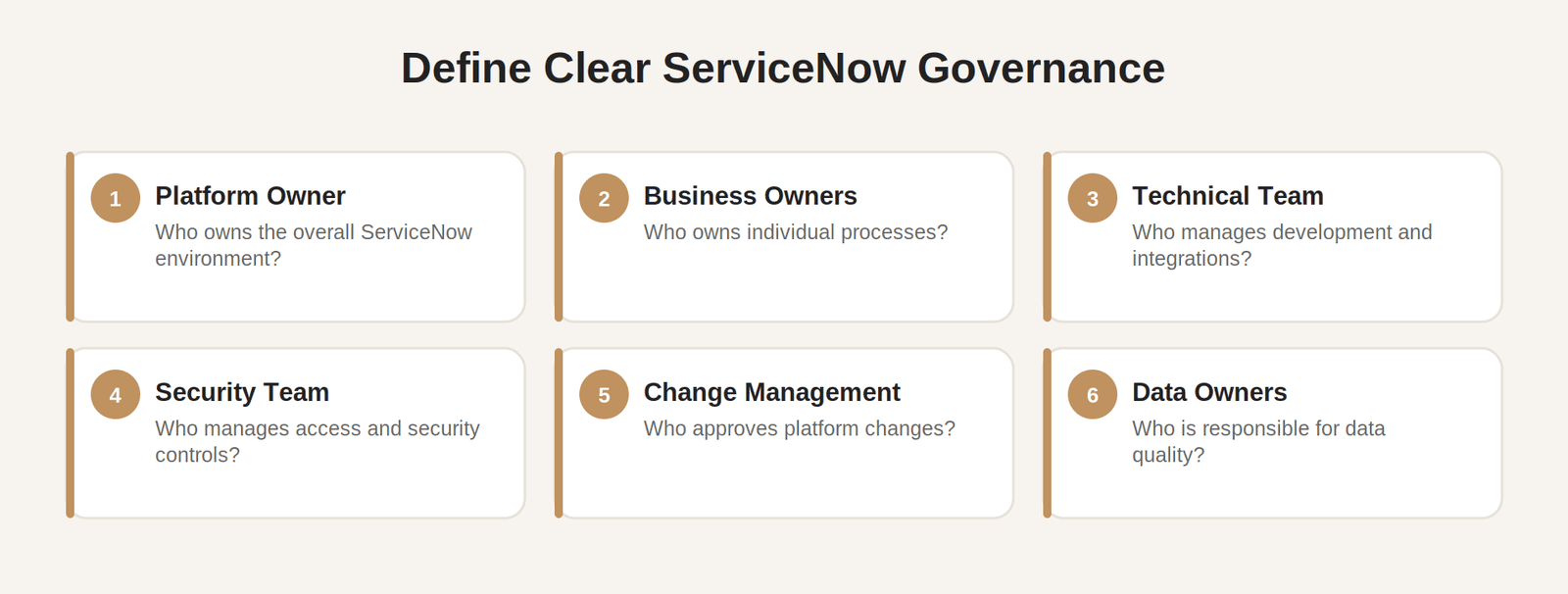
Define:
Platform Owner
Who owns the overall ServiceNow environment?
Business Owners
Who owns individual processes?
Technical Team
Who manages development and integrations?
Security Team
Who manages access and security controls?
Change Management
Who approves platform changes?
Data Owners
Who is responsible for data quality?
Without governance, ServiceNow can gradually become difficult to manage.
Treating AI as a Starting Point Instead of an Evolution
AI is one of the most exciting developments in ServiceNow.
But organizations should not begin an implementation by asking:
"Where can we put AI?"
Instead:
"Which process should we improve?"
Then:
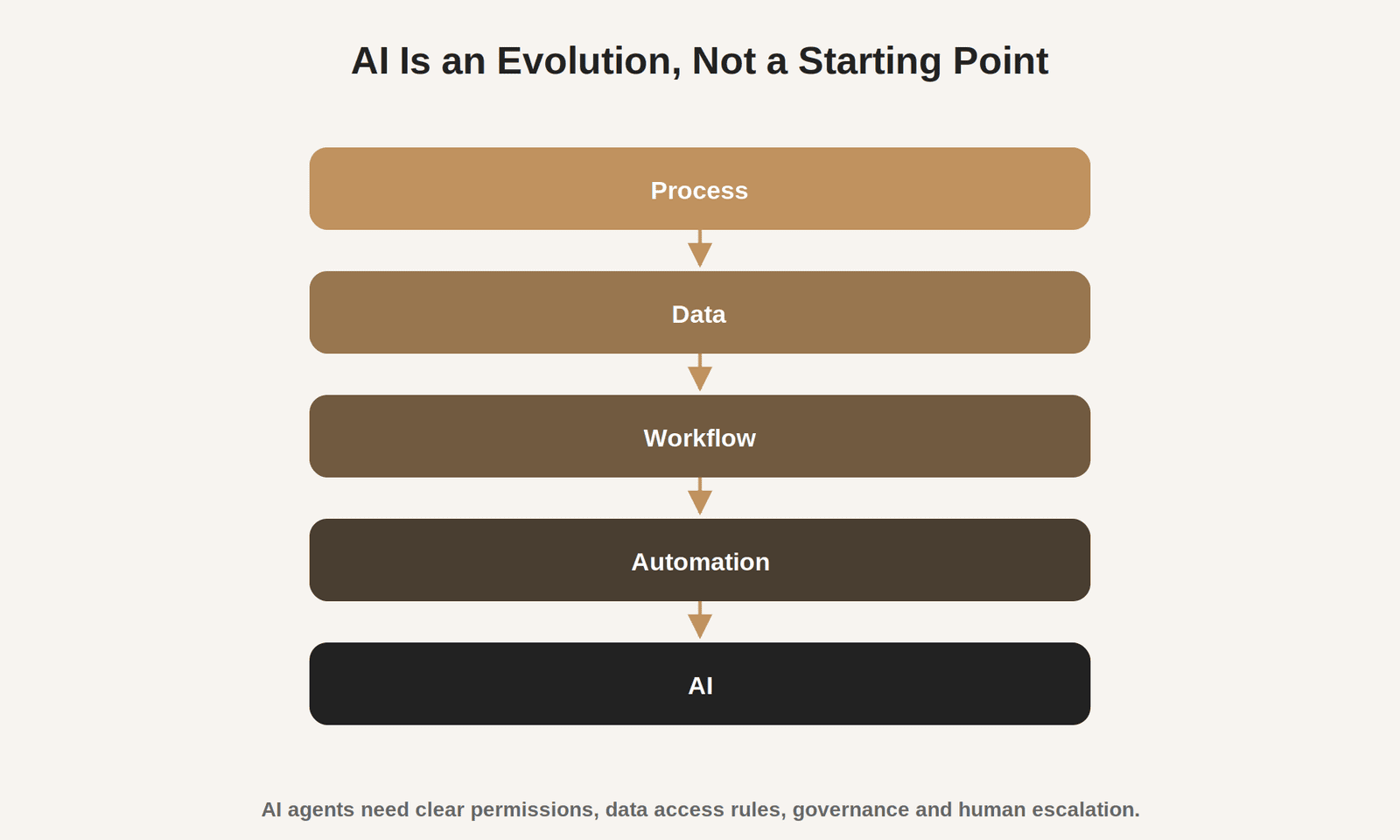
Process
↓
Data
↓
Workflow
↓
Automation
↓
AI
This is particularly important with AI agents. AI agents can potentially perform tasks and coordinate workflows, but organizations need clear permissions, data access rules, governance and human escalation.
The foundation must come first.
Choosing a ServiceNow Partner Based Only on Price
ServiceNow implementation is a long-term technology investment. Choosing a partner solely because they offer the lowest implementation price can create problems later.
Organizations should evaluate:
ServiceNow Expertise
Does the partner have relevant platform experience?
Industry Knowledge
Do they understand your business processes?
Integration Capability
Can they connect ServiceNow with your existing technology ecosystem?
Development Capability
Can they support custom requirements when needed?
Security
Do they follow appropriate security practices?
Support
What happens after implementation?
Scalability
Can the partner support your organization as the platform expands?
A strong ServiceNow implementation partner should be able to support the organization beyond the initial go-live.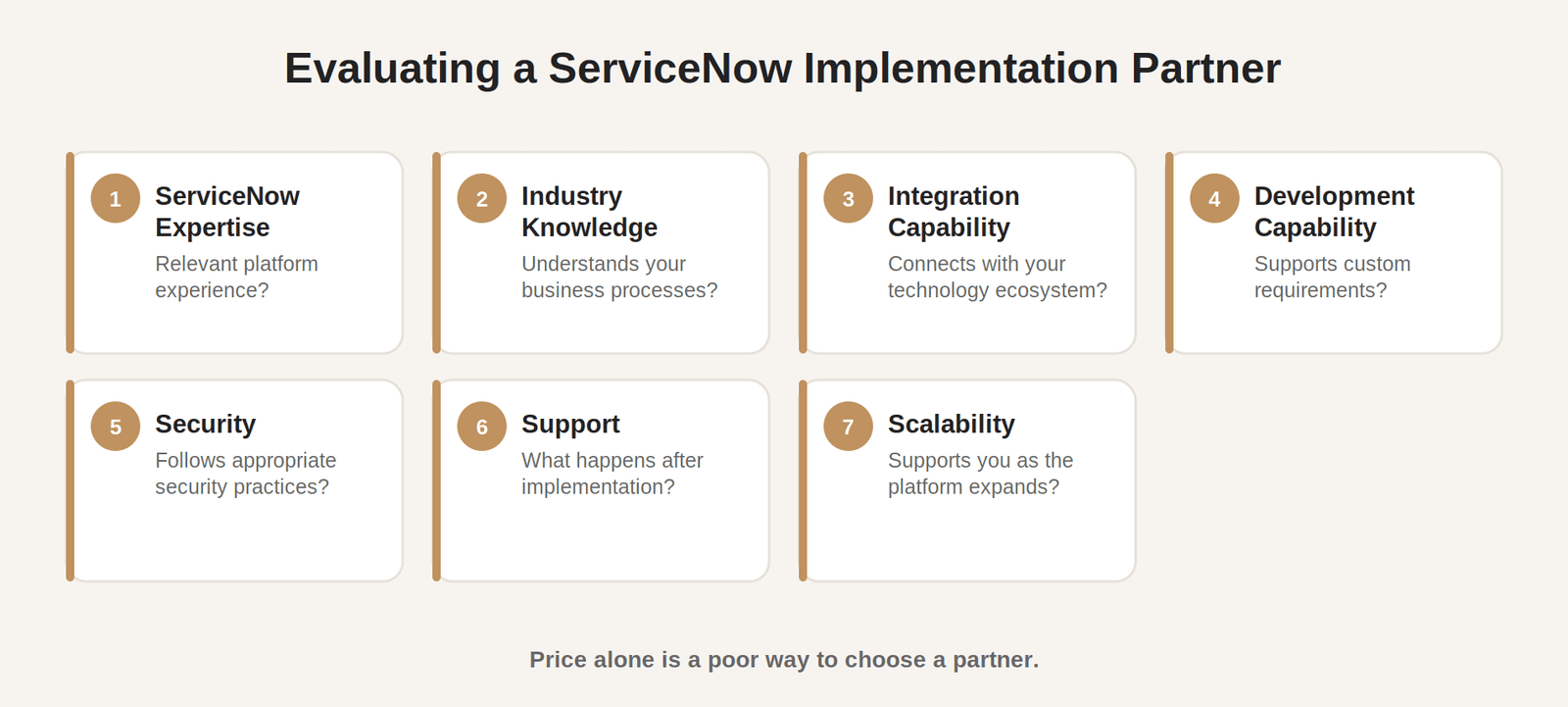
Forgetting What Happens After Go-Live
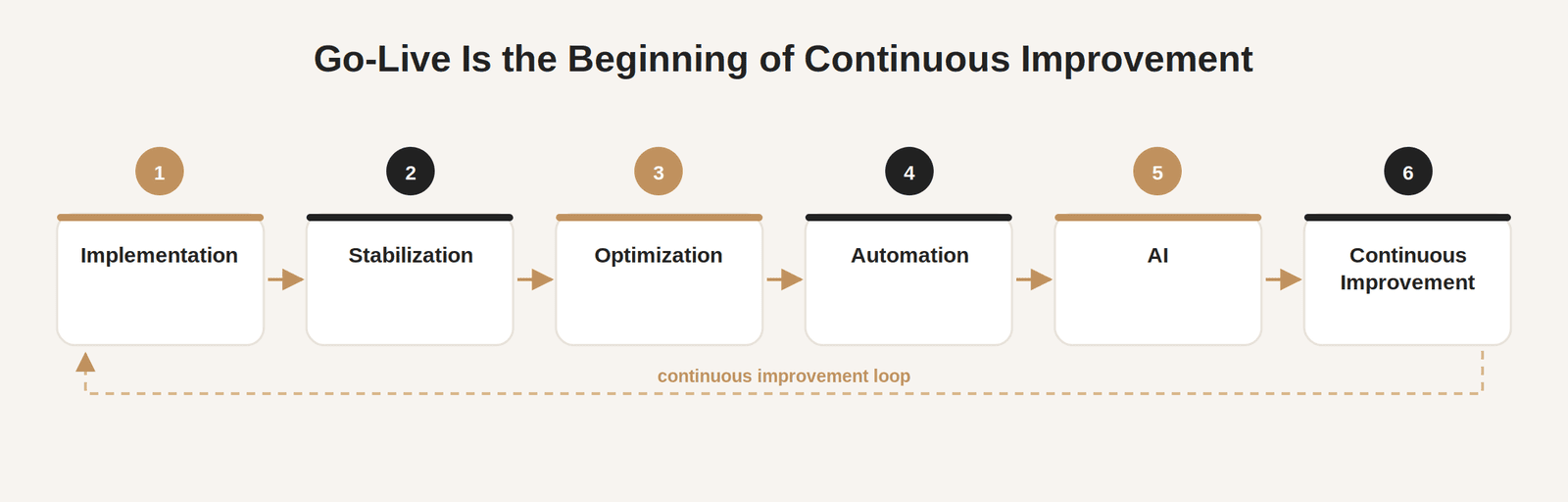
Go-live is not the end of a ServiceNow implementation.
It is the beginning of continuous improvement.
After launch, organizations will discover:
- New requirements
- Workflow improvements
- Integration changes
- User feedback
- Performance issues
- New automation opportunities
- Additional business use cases
A mature ServiceNow operating model therefore includes:
Implementation
↓
Stabilization
↓
Optimization
↓
Automation
↓
AI
↓
Continuous Improvement
A Better ServiceNow Implementation Framework
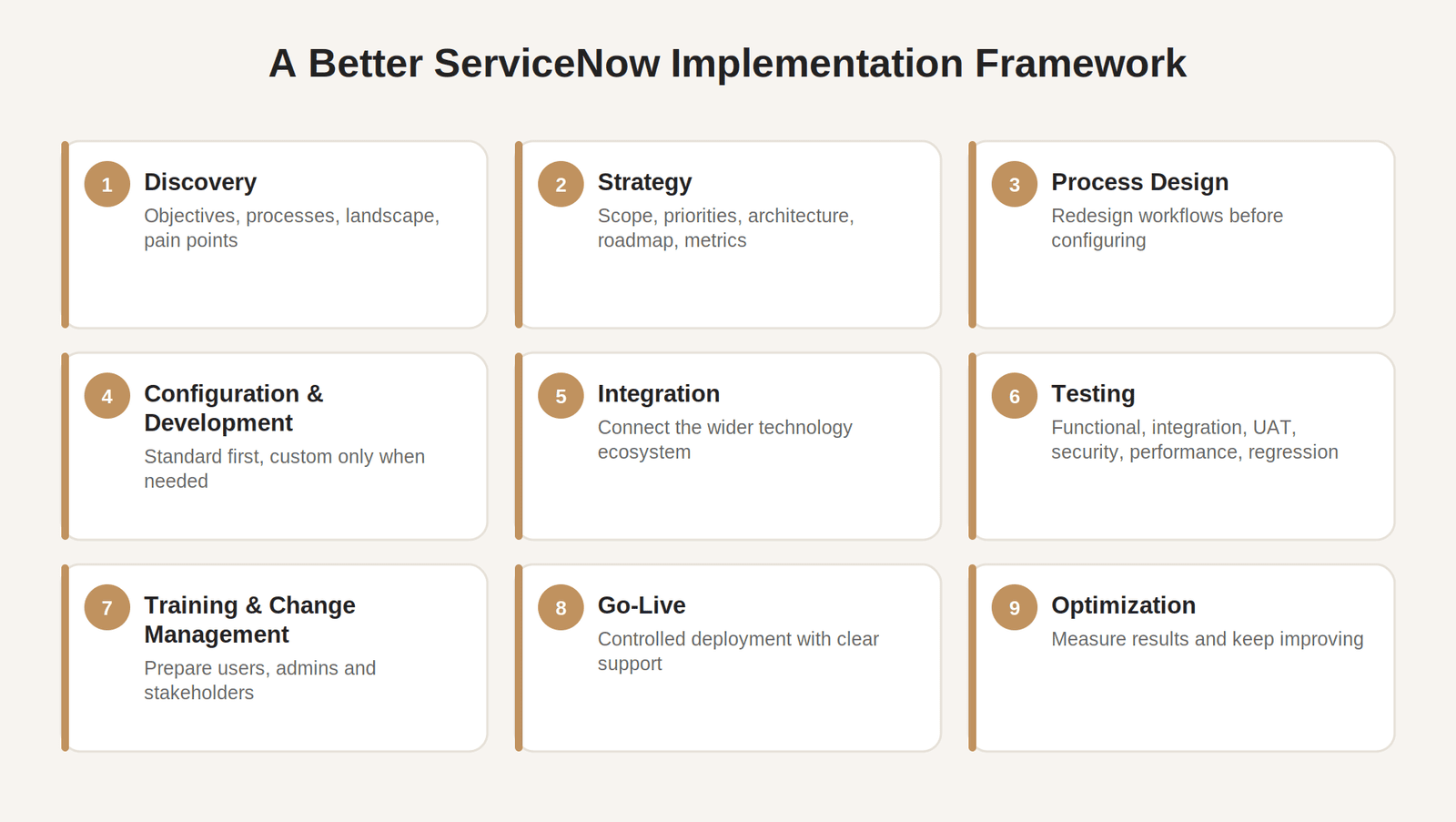
Instead of treating implementation as a single project, organizations can use a structured framework.
Phase 1 - Discovery
Understand:
- Business objectives
- Existing IT processes
- Technology landscape
- Pain points
- Stakeholders
- Data
- Integration requirements
Phase 2 - Strategy
Define:
- ServiceNow scope
- Priorities
- Architecture
- Implementation roadmap
- Governance
- Success metrics
Phase 3 - Process Design
Redesign workflows before configuring them.
Focus on:
- Simplicity
- Automation
- User experience
- Standardization
Phase 4 - Configuration & Development
Configure standard ServiceNow functionality first.
Develop custom components only when there is a clear business requirement.
Phase 5 - Integration
Connect ServiceNow to the organization's broader technology ecosystem.
Phase 6 - Testing
Testing should include:
- Functional testing
- Integration testing
- User acceptance testing
- Security testing
- Performance testing
Phase 7 - Training & Change Management
Prepare users, administrators and business stakeholders.
Phase 8 - Go-Live
Deploy in a controlled manner with clear support processes.
Phase 9 - Optimization
Measure results and continuously improve the platform.
How Long Does a ServiceNow Implementation Take?
You can edit text on your website by double clic
There is no universal implementation timeline.
It depends on:
- Number of modules
- Number of users
- Workflow complexity
- Integration requirements
- Data migration
- Custom development
- Testing requirements
- Organizational readiness
A focused ITSM implementation may be significantly simpler than a multi-department enterprise transformation involving ITSM, ITOM, ITAM, HR, security and multiple integrations.
The right question is therefore not:
"How quickly can we implement ServiceNow?"
It is:
"How quickly can we implement ServiceNow correctly while creating a foundation for future growth?"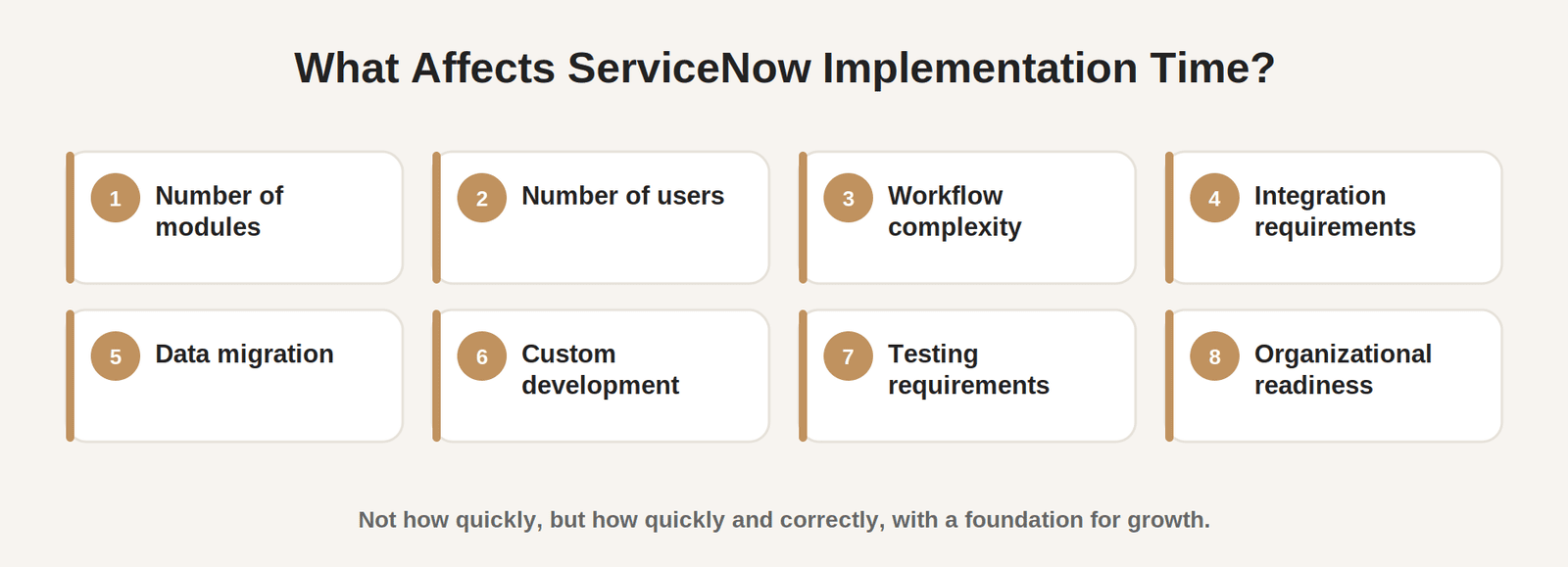
How Much Does ServiceNow Implementation Cost?
ServiceNow implementation costs depend on the scope and complexity of the project.
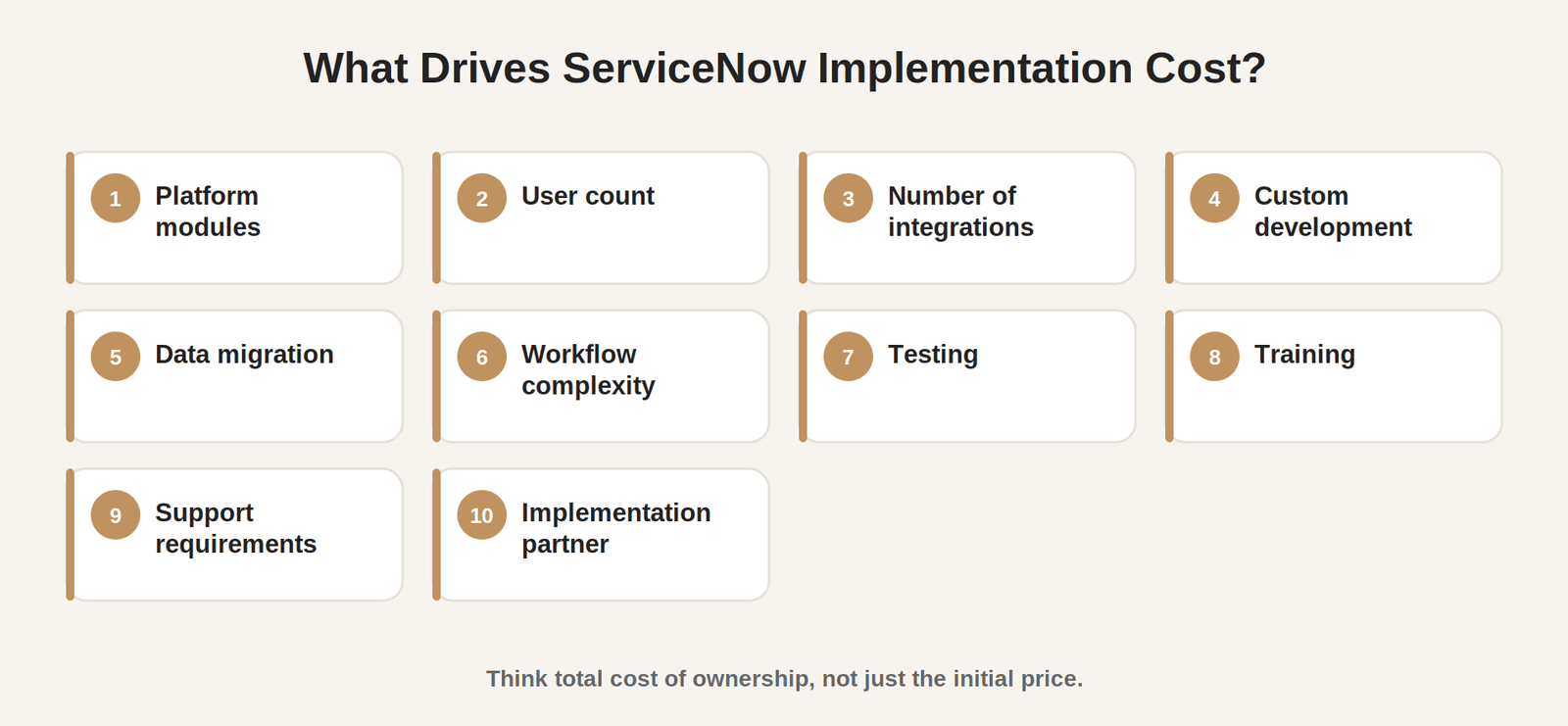
Key factors include:
- Platform modules
- User count
- Number of integrations
- Custom development
- Data migration
- Workflow complexity
- Testing
- Training
- Support requirements
- Implementation partner
Instead of evaluating implementation purely on initial cost, organizations should consider total cost of ownership.
ServiceNow Implementation and AI: What Should Businesses Do?
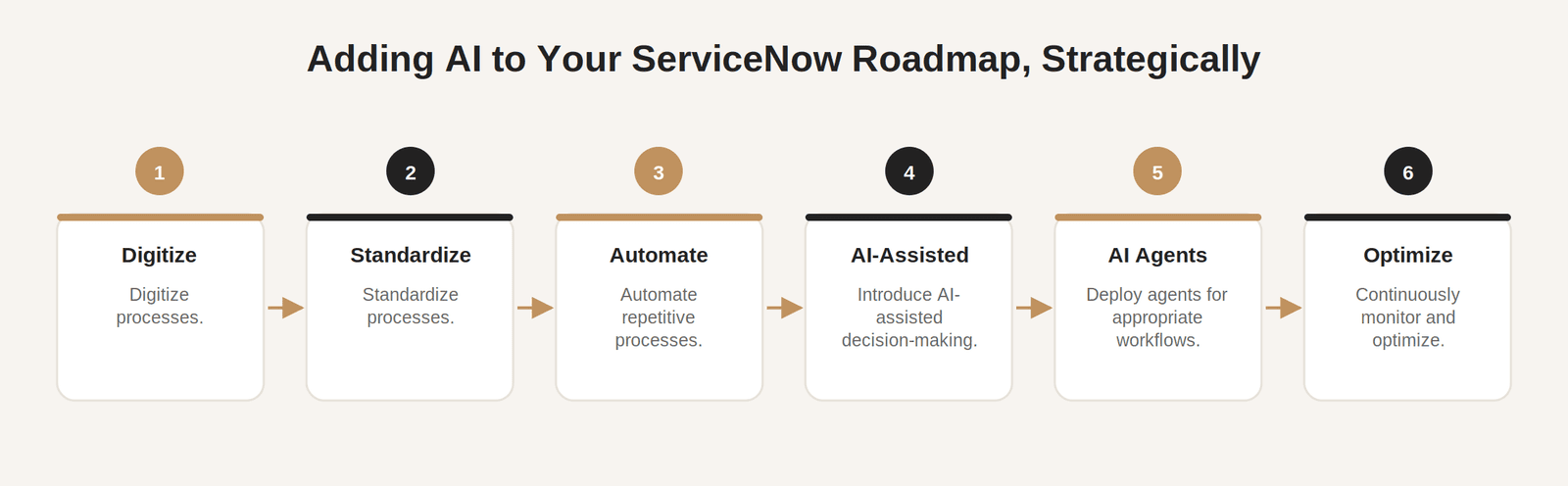
AI should be incorporated into the roadmap—but strategically.
A practical progression is:
Stage 1
Digitize processes.
Stage 2
Standardize processes.
Stage 3
Automate repetitive processes.
Stage 4
Introduce AI-assisted decision-making.
Stage 5
Deploy AI agents for appropriate workflows.
Stage 6
Continuously monitor and optimize.
This creates a more sustainable path toward intelligent enterprise operations.
Why ServiceNow Implementation Requires the Right Expertise
ServiceNow combines:
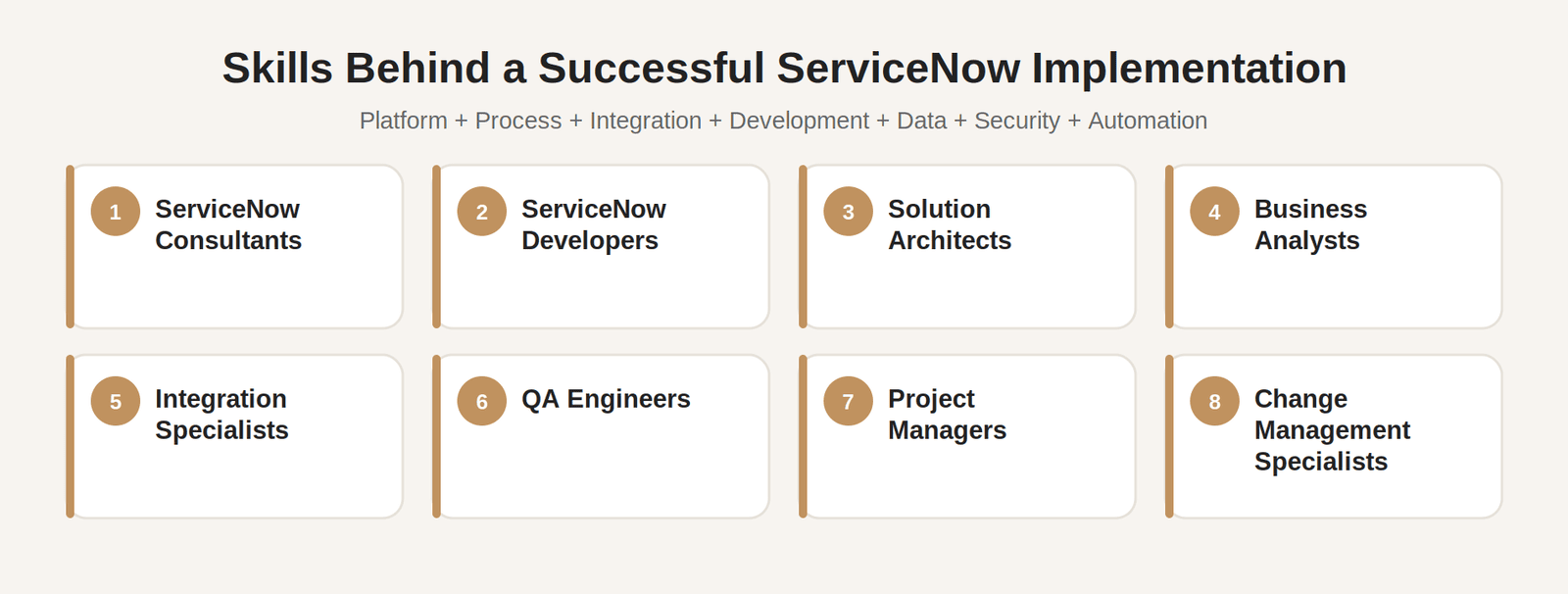
Platform + Process + Integration + Development + Data + Security + Automation
A successful implementation therefore requires multiple skill sets.
Depending on the project, organizations may need:
- ServiceNow Consultants
- ServiceNow Developers
- Solution Architects
- Business Analysts
- Integration Specialists
- QA Engineers
- Project Managers
- Change Management Specialists
This is one reason organizations often work with a specialized ServiceNow consulting company.
Why Choose Ohmsakthi Techno for ServiceNow Implementation?
At Ohmsakthi Techno, we approach ServiceNow from both the technology and business-process perspective.
Our objective is not simply to configure the platform.
We focus on understanding:
What is the business problem?
What process needs improvement?
What should be automated?
What systems need to integrate?
Where does AI create genuine value?
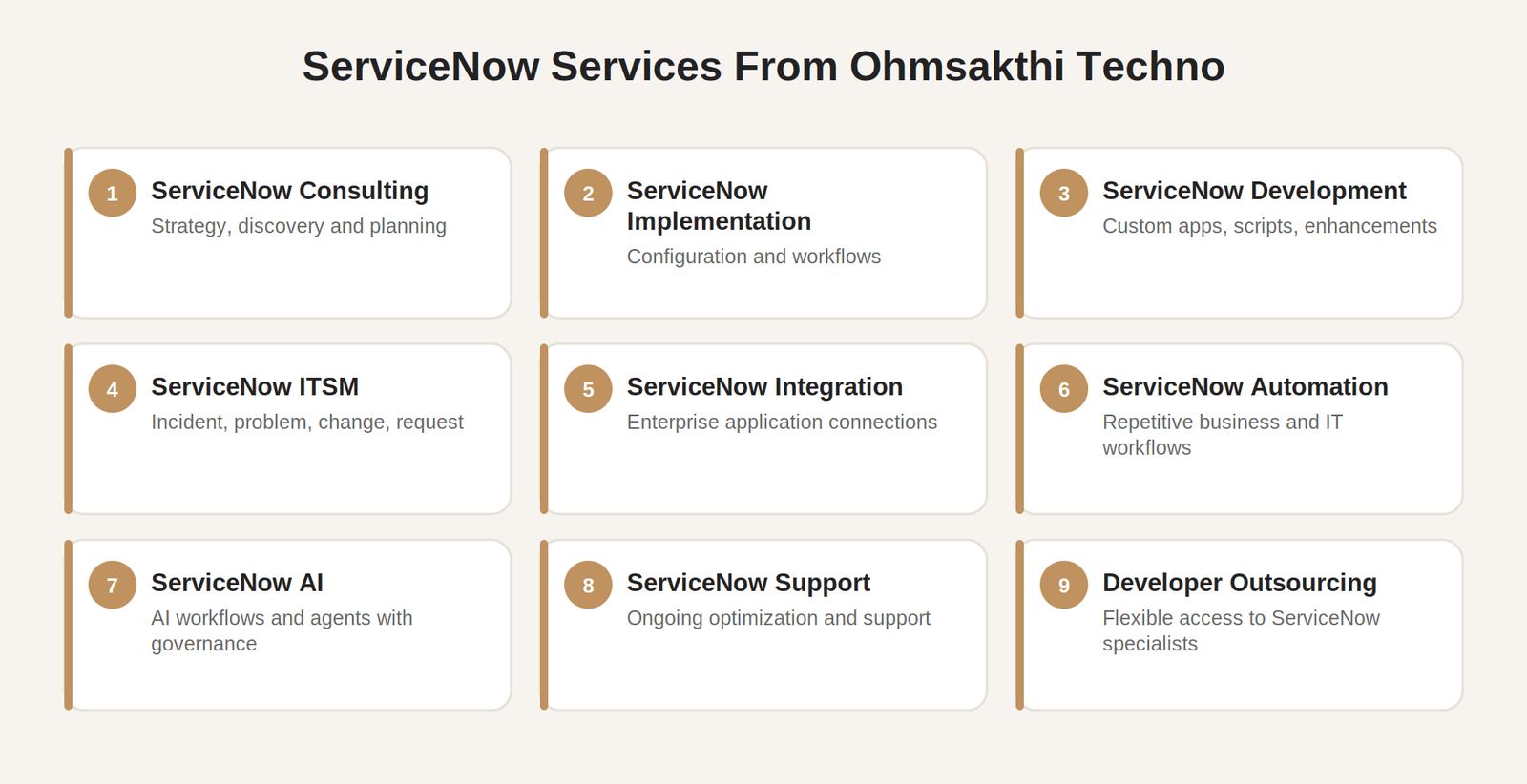
Our ServiceNow capabilities can support:
ServiceNow Consulting
Strategy, discovery and implementation planning.
ServiceNow Implementation
Platform configuration and workflow implementation.
ServiceNow Development
Custom applications, scripts and platform enhancements.
ServiceNow ITSM
Incident, problem, change and request management.
ServiceNow Integration
Connecting ServiceNow with enterprise applications.
ServiceNow Automation
Automating repetitive business and IT workflows.
ServiceNow AI
Exploring AI-powered workflows and AI agents with appropriate governance.
ServiceNow Support
Ongoing optimization and development support.
ServiceNow Developer Outsourcing
Flexible access to ServiceNow developers and technical specialists.
The Goal Isn't to Implement ServiceNow
This is perhaps the most important point.
The goal is not:
"We implemented ServiceNow."
The goal is:
"Our business operates better because of ServiceNow."
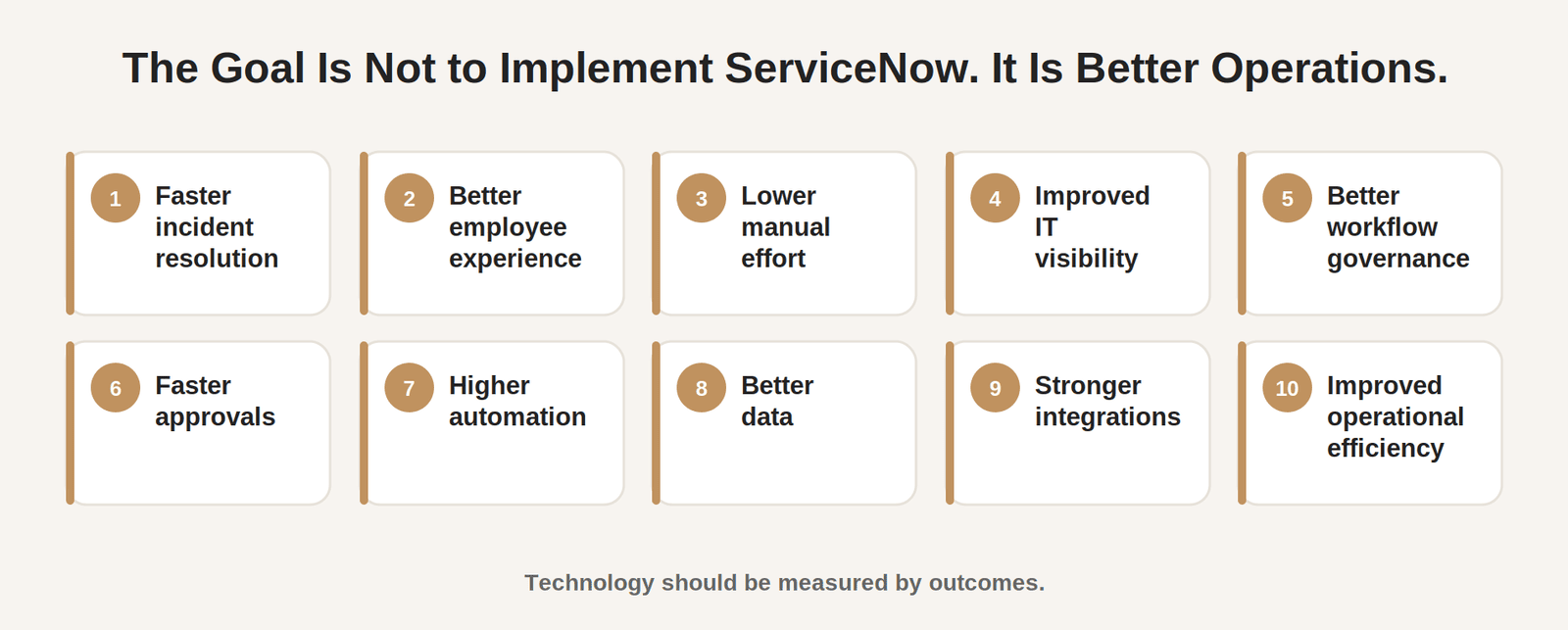
That could mean:
- Faster incident resolution
- Better employee experience
- Lower manual effort
- Improved IT visibility
- Better workflow governance
- Faster approvals
- Higher automation
- Better data
- Stronger integrations
- Improved operational efficiency
Technology should be measured by outcomes.
Your ServiceNow Transformation Starts With the Right Questions
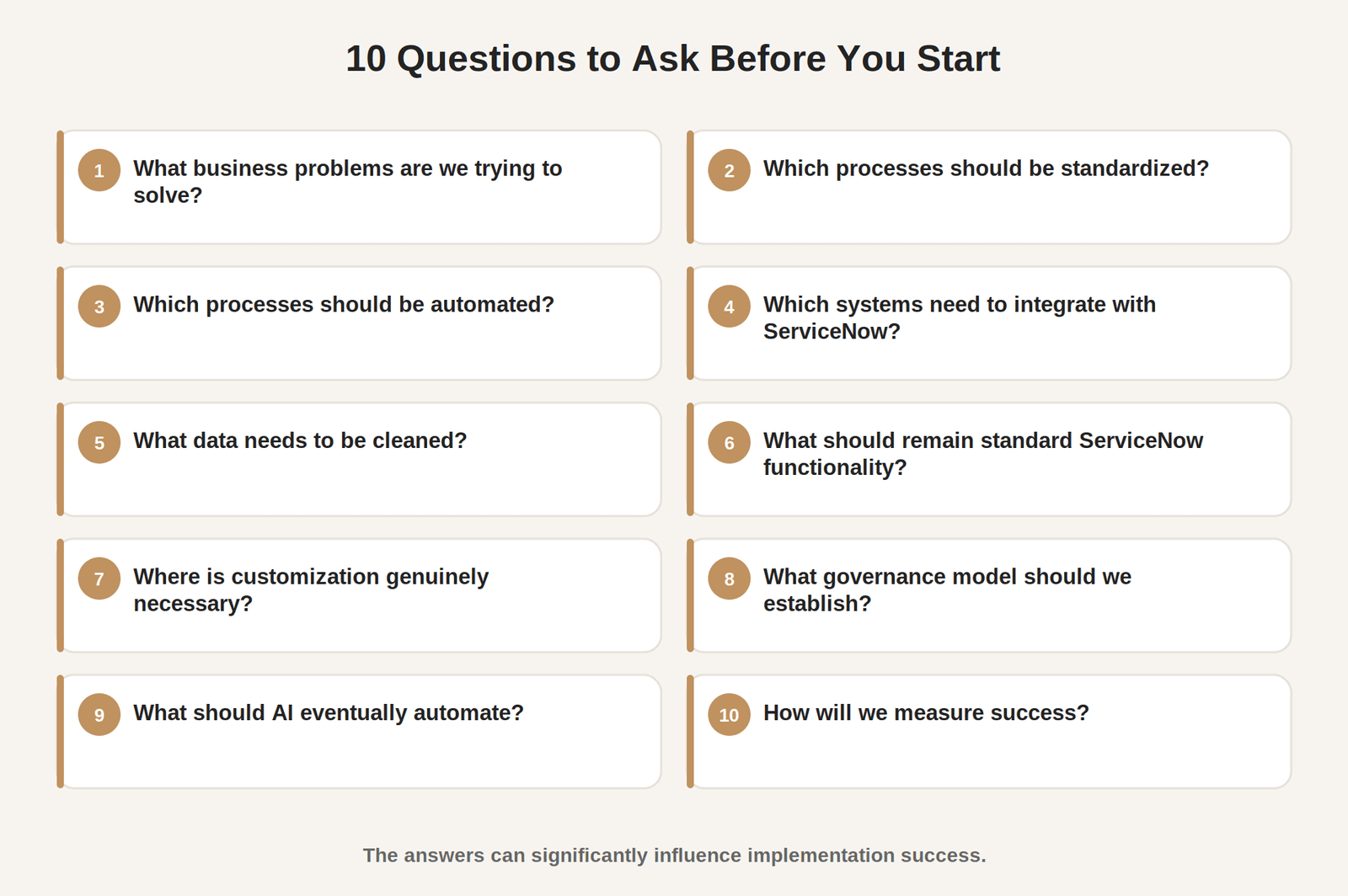
Before beginning your implementation, ask:
1. What business problems are we trying to solve?
2.Which processes should be standardized?
3.Which processes should be automated?
4.Which systems need to integrate with ServiceNow?
5.What data needs to be cleaned?
6.What should remain standard ServiceNow functionality?
7.Where is customization genuinely necessary?
8.What governance model should we establish?
9.What should AI eventually automate?
10.How will we measure success?
The answers to these questions can significantly influence the success of the implementation.
Build a Smarter ServiceNow Foundation With Ohmsakthi Techno
ServiceNow can become much more than an IT service management platform.
With the right implementation strategy, it can become a connected enterprise workflow platform that brings together people, processes, applications, data, automation and AI.
But successful transformation requires more than technology.
It requires:
Clear strategy.
Well-designed processes.
Strong implementation.
Reliable integration.
Good governance.
Continuous optimization.
If your organization is planning a new ServiceNow implementation, expanding an existing platform or evaluating how ServiceNow can support your digital transformation strategy, Ohmsakthi Techno can help you plan the right approach.
Planning a ServiceNow Implementation?
Talk to Ohmsakthi Techno about ServiceNow consulting, implementation, development, integration and automation.
Explore ServiceNow Services | Talk to a ServiceNow Expert | Request a Consultation
Frequently Asked Questions
What is ServiceNow implementation?
ServiceNow implementation is the process of configuring, developing, integrating and deploying the ServiceNow platform to support an organization's business and IT workflows.
How long does ServiceNow implementation take?
The timeline depends on the modules, integrations, workflows, customization, data migration and organizational requirements.
What does a ServiceNow implementation partner do?
A ServiceNow implementation partner can support discovery, strategy, architecture, configuration, development, integration, testing, training, deployment and post-go-live optimization.
Is ServiceNow only for ITSM?
No. ServiceNow has expanded beyond IT service management into areas such as IT operations, asset management, employee workflows, customer service, security, risk and enterprise automation.
Should businesses customize ServiceNow?
Customization should be carefully evaluated. Standard platform functionality should generally be considered first, with customization used when there is a clear business requirement.
Can ServiceNow integrate with other enterprise systems?
Yes. ServiceNow can integrate with many enterprise applications and platforms using APIs and integration technologies.
Can AI be included in a ServiceNow implementation?
Yes. AI capabilities can be incorporated into appropriate workflows, but organizations should establish data access, permissions, governance and human-approval requirements.
How much does ServiceNow implementation cost?
Costs vary depending on scope, modules, users, integrations, development, migration, testing and support requirements.
Do I need ServiceNow developers after implementation?
Many organizations benefit from ongoing ServiceNow development and optimization after go-live because workflows, integrations and business requirements continue to evolve.
Can ServiceNow implementation be outsourced?
Yes. Organizations can use a ServiceNow consulting and implementation partner for the entire project or specific workstreams.